Sound-Design:
In many game productions, stock sounds from selected sound archives are used for audio production. [b]This is not the case for Ad Infinitum[/b]. Over the course of the last four years, hundreds of hours of sound recording has been created our game: In field trips lasting several days, we visited numerous locations in and around Berlin, ranging from old churches to abandoned factory sites, as well as a botanical garden with greenhouses just to mention a few.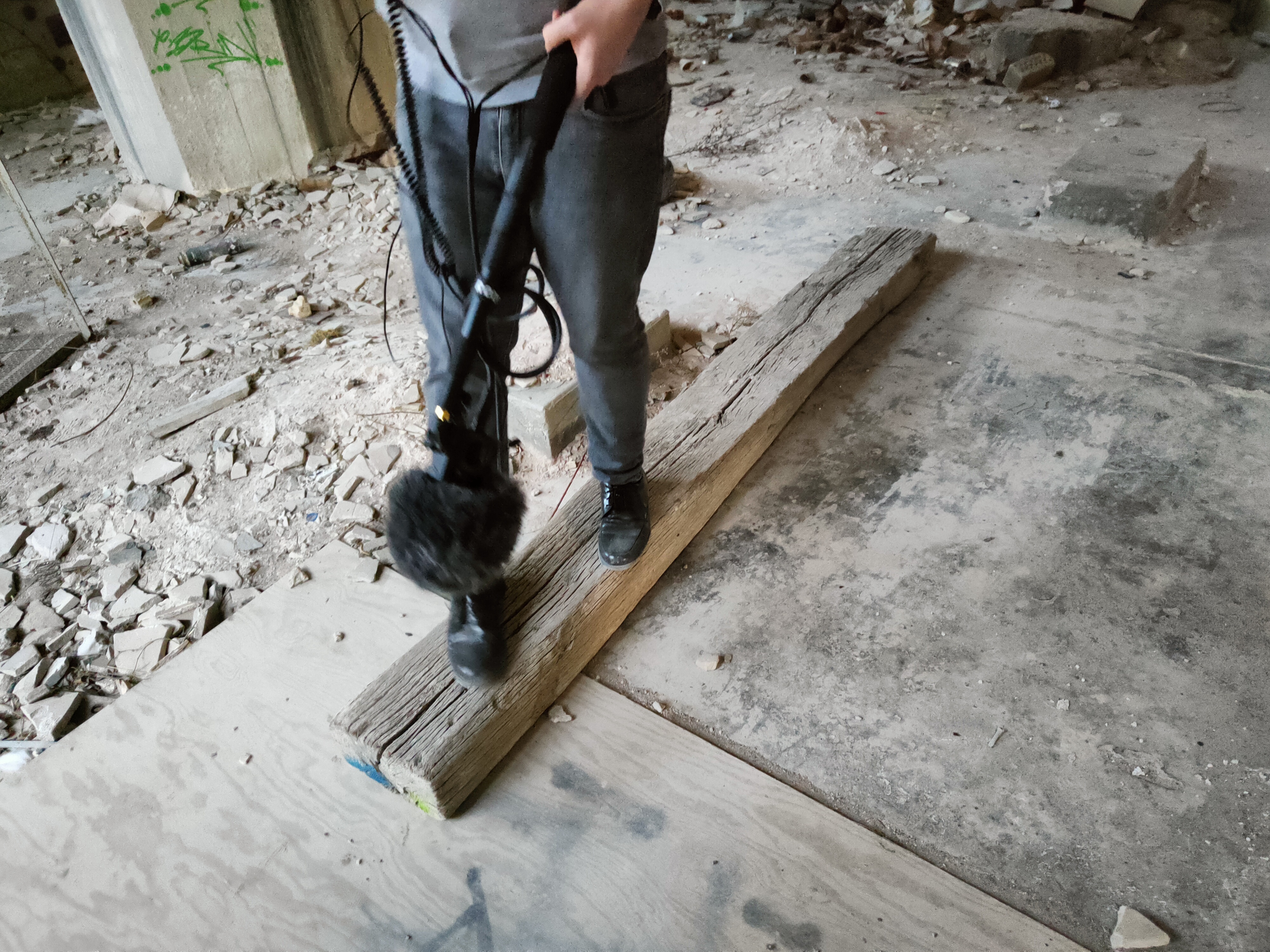 Armed with our Stereo/Ambisonic microphone set and telescope pole, we defied thunderstorms, downpours, and heavy storms going as far as recording the roaring thunders of a nighttime storm on a rooftop (don’t do it at home!).
Whether outside or in our cozy and sound-proof studio, we always strived to capture even the most delicate nuances. Findings from attics, such as an old pair of leather shoes with wooden soles, allowed us to record consistent footstep sounds for the player: for over 14 surface types, we recorded ourselves walking and running. This way, players always have the feeling of consistency, regardless of whether they are wading through knee-deep water and crawling through mud in the trenches, or wandering through the Schmitt family's mansion with its creaking parquet floors, dusty carpets, and elegant marble tiles. For the tools, we purchased, for example, a replica of a gas mask 17 of the German Imperial Army, one time we scavenged old wooden pallets, which we then shattered with a pickaxe in the studio.
Armed with our Stereo/Ambisonic microphone set and telescope pole, we defied thunderstorms, downpours, and heavy storms going as far as recording the roaring thunders of a nighttime storm on a rooftop (don’t do it at home!).
Whether outside or in our cozy and sound-proof studio, we always strived to capture even the most delicate nuances. Findings from attics, such as an old pair of leather shoes with wooden soles, allowed us to record consistent footstep sounds for the player: for over 14 surface types, we recorded ourselves walking and running. This way, players always have the feeling of consistency, regardless of whether they are wading through knee-deep water and crawling through mud in the trenches, or wandering through the Schmitt family's mansion with its creaking parquet floors, dusty carpets, and elegant marble tiles. For the tools, we purchased, for example, a replica of a gas mask 17 of the German Imperial Army, one time we scavenged old wooden pallets, which we then shattered with a pickaxe in the studio.
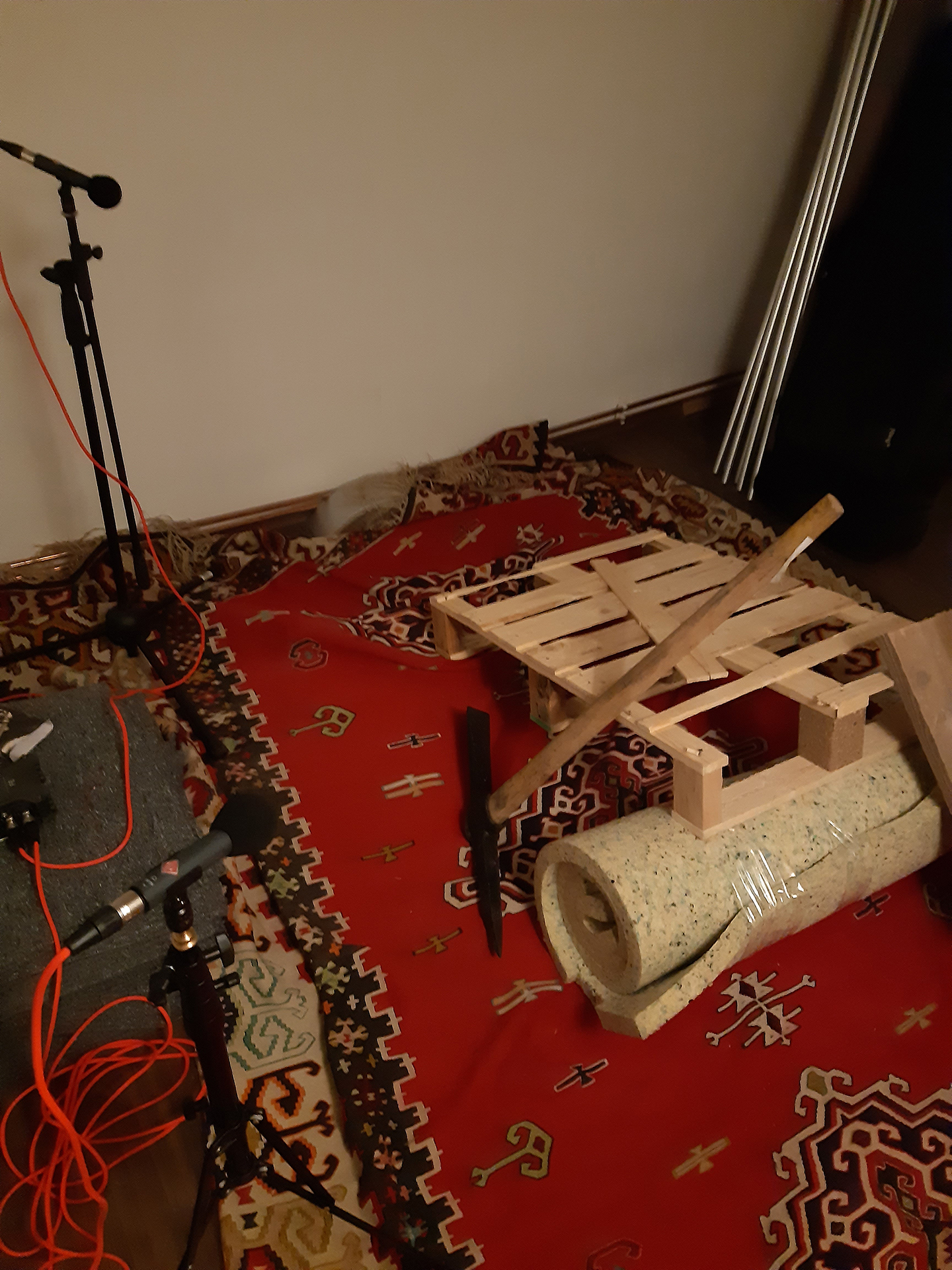 After all that record, we had to put ourselves to work - sound Design Projects can become very big: some of our Cutscenes have up to 600 layers with automated Sound-Design.
Music:
[b]We created 39 tracks for Ad Infinitum[/b], in addition to the cutscenes and jumpscares that are not included on the soundtrack. Music is one of the most important tools in Ad Infinitum to support the storytelling, but also to affect the players emotions. While some tracks are linear in their progression, many tracks are designed to be adaptive. This means that the music changes according to the game's progress. When the protagonist (Paul) first finds himself in the von Schmitt family mansion, the music has 8 separate stages that change as the player progresses, such as when it has solved a particular puzzle.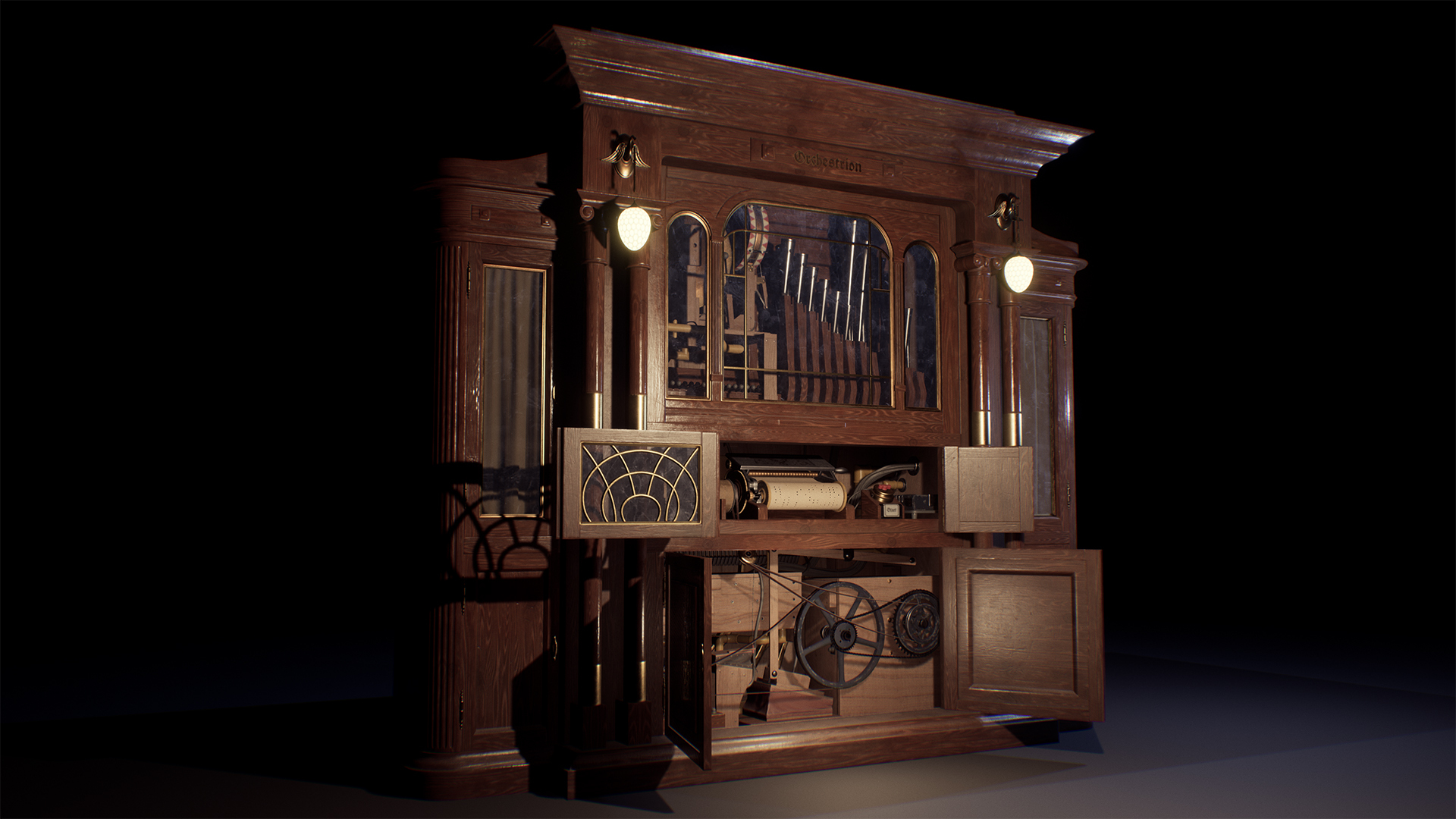 The game is built into three main chapters and for each, we established a musical arc that builds itself up gradually but also thematically and drives the story and tension forward. Various leitmotifs are gradually introduced throughout the game and further developed: The Despair motif, for example, which first appears in the mansion during the séance, is then tentatively resumed in the destroyed village establishing a feeling of hopelessness, finally unleashes itself in fury in the Trauma Domain as an epic showdown with the Greater Horror.
The same motifs can be seen throughout the game, the music evolving with the player’s discoveries and relations with his family, each character owning its own leitmotiv and showing their state of mind, from a fragile quiet almost discordant violin, later combined with flutes that take on an almost fluttery, to rattling metallic percussion instruments, that have an almost barbwire like character.
But not only do characters tell their story through leitmotiv and orchestration, and are reflections of certain intimate emotional worlds that the written narrative can only mirror superficially.
Locations receive these qualities, thus the home ("Heimat") motif is already built up in the first chapter while walking through the quiet corridors of the von Schmitt's residence while telling a story of nostalgia and stagnation. This motif is later reintroduced in the trenches, as the front becomes the new home for Paul.
Some of the music pieces were also recorded with live musicians and vocalists. For “Schatten so Süß, in addition to live musicians (cello and piano), we also recorded with a Baritone who sang a German rendition of the original Latin text. Another example is the Lied vom Schatten (Song of the Shadow), which lyrics were adapted after a poem by Leo Sternberg and performed by Achim Buch. Leo Sternberg was a poet who experienced the First World War in all its horrors as a soldier, but who is almost forgotten today. We are proud and happy to be able to immortalize his timeless poetry in our game.
[u][b][url=https://open.spotify.com/intl-fr/track/6BFLcx0n1ZEGTcc3jqXxod?si=0f37b4f1a31a4910]Lukas Deuschel - Song of Shadow (Credits)[/url][/b][/u]
The game is built into three main chapters and for each, we established a musical arc that builds itself up gradually but also thematically and drives the story and tension forward. Various leitmotifs are gradually introduced throughout the game and further developed: The Despair motif, for example, which first appears in the mansion during the séance, is then tentatively resumed in the destroyed village establishing a feeling of hopelessness, finally unleashes itself in fury in the Trauma Domain as an epic showdown with the Greater Horror.
The same motifs can be seen throughout the game, the music evolving with the player’s discoveries and relations with his family, each character owning its own leitmotiv and showing their state of mind, from a fragile quiet almost discordant violin, later combined with flutes that take on an almost fluttery, to rattling metallic percussion instruments, that have an almost barbwire like character.
But not only do characters tell their story through leitmotiv and orchestration, and are reflections of certain intimate emotional worlds that the written narrative can only mirror superficially.
Locations receive these qualities, thus the home ("Heimat") motif is already built up in the first chapter while walking through the quiet corridors of the von Schmitt's residence while telling a story of nostalgia and stagnation. This motif is later reintroduced in the trenches, as the front becomes the new home for Paul.
Some of the music pieces were also recorded with live musicians and vocalists. For “Schatten so Süß, in addition to live musicians (cello and piano), we also recorded with a Baritone who sang a German rendition of the original Latin text. Another example is the Lied vom Schatten (Song of the Shadow), which lyrics were adapted after a poem by Leo Sternberg and performed by Achim Buch. Leo Sternberg was a poet who experienced the First World War in all its horrors as a soldier, but who is almost forgotten today. We are proud and happy to be able to immortalize his timeless poetry in our game.
[u][b][url=https://open.spotify.com/intl-fr/track/6BFLcx0n1ZEGTcc3jqXxod?si=0f37b4f1a31a4910]Lukas Deuschel - Song of Shadow (Credits)[/url][/b][/u]