 [i]Read a deep dive letter from ZeniMax Online Studio’s Combat Team as they share their core philosophies, goals, and planning surrounding the future of ESO’s classes.[/i]
Earlier this fall, we asked for your feedback on [i]ESO[/i]’s classes, including your pain points and overall impressions on class identity. As part of our efforts to address longstanding player feedback and improve the overall look, feel, and balance of combat, we are working on a long-term project to revitalize [i]ESO[/i]’s classes.
To help the community understand the scope and context for these changes, we aim to be transparent about our goals concerning [i]ESO[/i]’s class identities. You can read more about our design philosophy, vision for [i]ESO[/i]’s classes, goals, identity framework, and rollout for the related changes below.
[i]Read a deep dive letter from ZeniMax Online Studio’s Combat Team as they share their core philosophies, goals, and planning surrounding the future of ESO’s classes.[/i]
Earlier this fall, we asked for your feedback on [i]ESO[/i]’s classes, including your pain points and overall impressions on class identity. As part of our efforts to address longstanding player feedback and improve the overall look, feel, and balance of combat, we are working on a long-term project to revitalize [i]ESO[/i]’s classes.
To help the community understand the scope and context for these changes, we aim to be transparent about our goals concerning [i]ESO[/i]’s class identities. You can read more about our design philosophy, vision for [i]ESO[/i]’s classes, goals, identity framework, and rollout for the related changes below.
Design Philosophy Concepts
As we discuss how our vision translates into our goals, it’s useful to understand our design philosophy and a few key concepts that guide it. [b][i]What does class identity mean to us?[/i][/b] For us, class identity is what makes a class unique and different from other classes. This covers everything from a part of who they are, what they can do, how they look, what they excel at, and what they don’t excel at. When we look at class identity, we use two core pillars to support the experience: source of power and power fantasy. [b][i]What do we mean by “source of power”?[/i][/b] When we talk about the “source of power” for a class, we are referring to what the lore-relevant origin of a class’s power is and what might differentiate them from a “normal” citizen of Tamriel. Questions such as these come up: “What caused this person to become a Dragonknight/Arcanist/Sorcerer?” “What are their motivations?” “Where do they get their power from?” The answers to these questions help inform the way their abilities are developed as an extension of their source of power. [b][i]What do we mean by “power fantasy”? [/i][/b] Power fantasy takes the source of the power a step further and influences how a character receives and is then able to use it (e.g., area of effect, damage over time, direct damage, etc.). By taking their source of power and putting it into a delivery mechanism, we aim to create the sensation of what it would feel like to [i]be[/i] that class. Different power sources shape distinct playstyles. For example, Nightblades rely on cunning and shadow to stay elusive in battle, striking while the moment is right, while Templars draw on divine energy for more zealous and direct combat. These differences help set [i]ESO[/i]'s classes apart from one another in terms of their identity. It’s why some classes have specific power delivery mechanisms that others do not, thus contributing to a more distinct playstyle and establishing a stronger class identity mix.Adapting Around Player Experiences
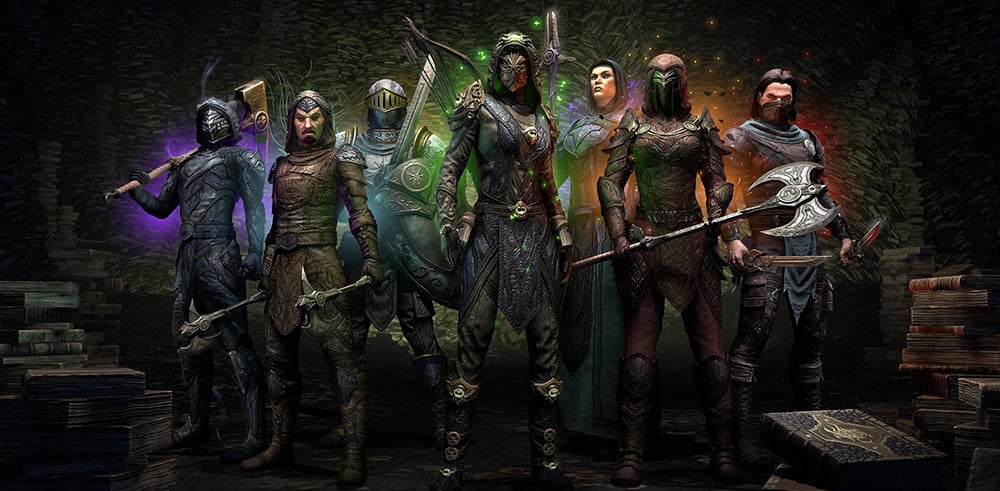
While it’s always important to have a class’s vision and goals in mind, it’s just as important to ensure that they hold up after the community adapts to new tools and features. As new systems and improvements are introduced, development becomes an ongoing process that requires continual refining. For example, one of the biggest pieces of community feedback that we’re looking into is how subclassing interacts with class identity and game balance. Subclassing at its core directly competes with our established version of class identity and instead puts that agency into your hands, giving [i]you[/i] the ability to create anything you want. While this is a deeply important part of the feature for us, it also currently comes with some drawbacks for balance. [url=https://esosslfiles-a.akamaihd.net/ape/uploads/2025/12/1fe2faa9c0a4862ecc0d61b99611c44a.jpg]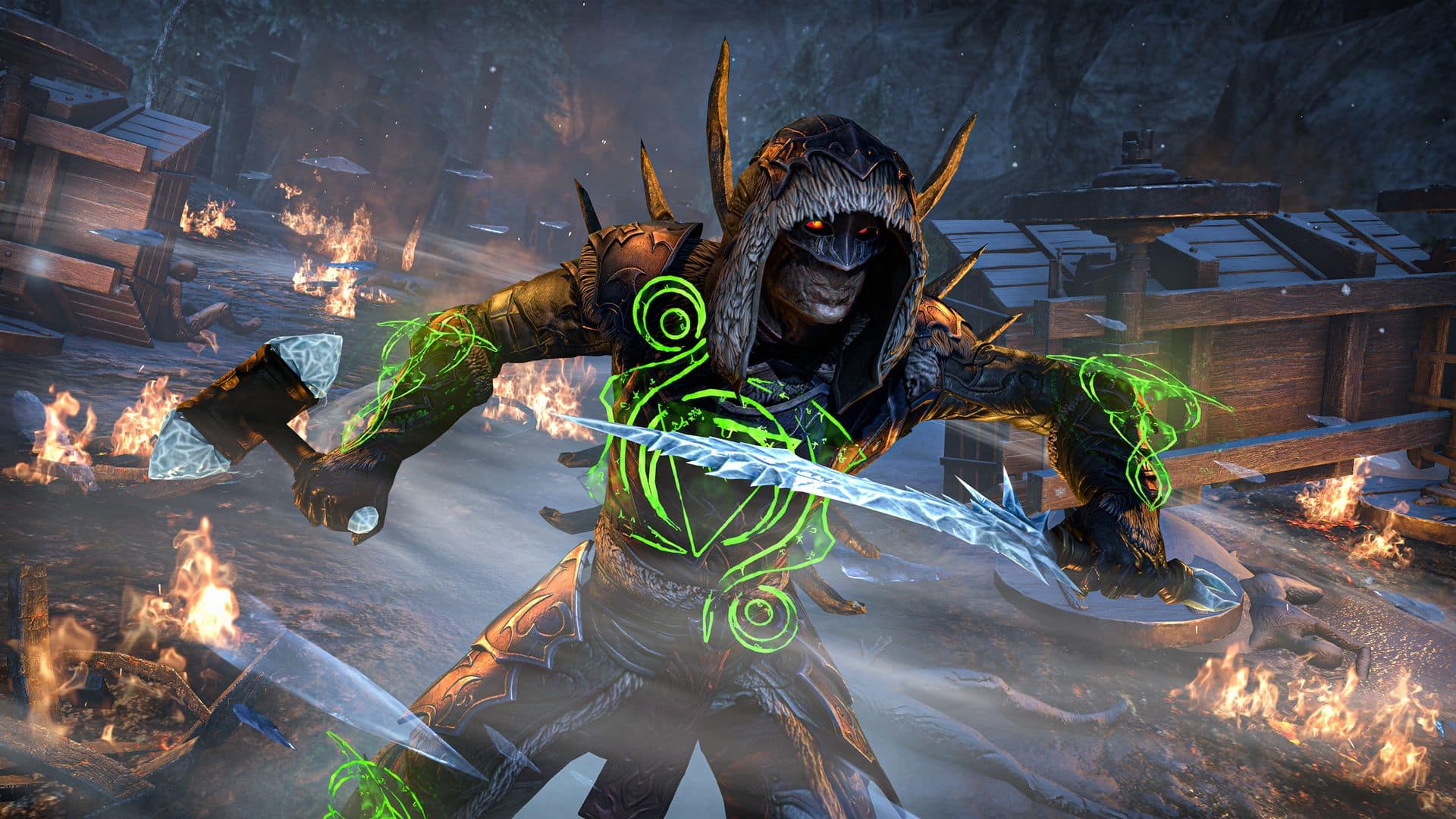 [/url]
[i]The community constantly adapts to new systems and skills[/i]
As it stands, subclassing is objectively stronger than “pure” classing by a large margin for several reasons. This is mostly caused by the vast differences in individual skill line designs. [i]ESO [/i]was not built from launch with subclassing in mind, and the system highlighted issues with the current class skill line design that were not previously a factor but are untenable going forward.
To support the overall health of the game and class system, we need to respond and adapt to how the game has changed based on how players are using the subclassing feature. With this in-game data and player feedback, and available development resources in place, we have a clearer picture of the scope of changes that need to be made.
These insights have led us to re-examine our class’s identities: how they’re expressed and designed from individual abilities and passives, where those abilities are sourced, and how they all come together to create a cohesive class and identity.
One overarching pattern you’ll see as we move toward improving this experience is reorganizing class skill lines, adding in more benefits for sticking with the core skill lines of your class, and decentralizing role-specific power so that a single skill line won’t have every tool you need to achieve your goals.
Our aim isn’t necessarily to nerf, though. While in some instances nerfs may be necessary, we’ll be using values and specific effects to create more powerful or punchy abilities and passives, but with greater nuances that prevent subclassing from completely dominating the meta.
What we aim to achieve is twofold: For those who prefer to play a pure class, you should have a strong and satisfying class identity and the power you need to achieve your goals. For those who wish to dive into subclassing, you should feel the freedom to forge your own identity, or even forego identity, for the sake of specialized power, but with less of a difference in power compared to the pure-class options.
[/url]
[i]The community constantly adapts to new systems and skills[/i]
As it stands, subclassing is objectively stronger than “pure” classing by a large margin for several reasons. This is mostly caused by the vast differences in individual skill line designs. [i]ESO [/i]was not built from launch with subclassing in mind, and the system highlighted issues with the current class skill line design that were not previously a factor but are untenable going forward.
To support the overall health of the game and class system, we need to respond and adapt to how the game has changed based on how players are using the subclassing feature. With this in-game data and player feedback, and available development resources in place, we have a clearer picture of the scope of changes that need to be made.
These insights have led us to re-examine our class’s identities: how they’re expressed and designed from individual abilities and passives, where those abilities are sourced, and how they all come together to create a cohesive class and identity.
One overarching pattern you’ll see as we move toward improving this experience is reorganizing class skill lines, adding in more benefits for sticking with the core skill lines of your class, and decentralizing role-specific power so that a single skill line won’t have every tool you need to achieve your goals.
Our aim isn’t necessarily to nerf, though. While in some instances nerfs may be necessary, we’ll be using values and specific effects to create more powerful or punchy abilities and passives, but with greater nuances that prevent subclassing from completely dominating the meta.
What we aim to achieve is twofold: For those who prefer to play a pure class, you should have a strong and satisfying class identity and the power you need to achieve your goals. For those who wish to dive into subclassing, you should feel the freedom to forge your own identity, or even forego identity, for the sake of specialized power, but with less of a difference in power compared to the pure-class options.
Long-Term Vision
[i]ESO [/i]has evolved tremendously over the last decade, and as new systems and classes have been introduced, the bars for the play experience and our design philosophy have been raised. As part of this project, we have established a holistic, long-term plan for how we aim to modernize [i]ESO[/i]’s classes and to bring them more in line with one another. It extends beyond addressing identity, balance, or look and feel in isolation, and it aims to address multiple class issues. While many of the items in the list below have always been what we strive to accomplish (and that isn’t changing), we will be spending more time strengthening [i]ESO[/i]’s classes and focusing on these guiding principles. Our long-term vision is: [olist][*]Every class will be viable in any role. To us, viability means players can reach their goals with the choices offered. This does not necessarily mean equally optimal but always providing multiple choices for you.[/*][*]We want each class to feel cohesive and true to its power fantasy with abilities, animations, and audio effects that reinforce its core identity. This means refreshing and modernizing abilities, so they look and feel as impactful as those of more recently introduced classes like the Arcanist. [/*][*]We're committed to evolving our design philosophies by using player feedback and in-game data to help guide class updates. As we address balance concerns and update class mechanics, our goal is to ensure that every class feels good to play, both mechanically and thematically, while keeping the unique flavor that sets each apart.[/*][/olist]Goals
For this refresh of [i]ESO[/i]’s classes, our primary goals that support the long-term vision we laid out are:- Strengthen the unique identities of each class, making them feel fun and rewarding, as well as thematically unique and engaging to play.
- Improve the balance between pure classing and subclassing, so both paths have their place in the game.
- Make each class's skill lines more varied and distinct for what they offer a role, so that each skill line holds something valuable, regardless of what you play.
- Use both in-game data and player feedback to help inform our decisions, ensuring changes reflect player experiences and preferences.
- Address power outliers in abilities and skill lines, and look at balance concerns as we progress through each of the classes, prioritizing mathematical and functional changes before visual and audio updates.
Identity
Below, we lay out the unique high-level identities we envision for each of these classes and how that would be translated into the gameplay experience. This might be what you would expect to see on a character creation screen. [url=https://esosslfiles-a.akamaihd.net/ape/uploads/2025/12/c7da63c24b82ef5f38ce26c495e70578.jpg] [/url]
[i]Class identities [/i]
In the interest of fostering communication, transparency, and building trust, we want to keep you informed as these updates progress. With this in mind, we are in the early stages of the process, and the class information outlined above is still subject to change and further refinement as we work through addressing each class.
[/url]
[i]Class identities [/i]
In the interest of fostering communication, transparency, and building trust, we want to keep you informed as these updates progress. With this in mind, we are in the early stages of the process, and the class information outlined above is still subject to change and further refinement as we work through addressing each class.
Rollout
This is a major, comprehensive initiative that will span several updates. We are prioritizing classes that require the most modernization and balance work first. For some classes, this will be an exercise in refinement, for others it will mean a more thorough reconfiguring, and for some classes it may be a mix of both. As we get closer to beginning work on each class, we’ll go into deeper detail with regular updates about the upcoming changes. Each class will be addressed one at a time and receive impactful mechanical and balance changes in addition to any needed updates to visuals and audio. We’re starting with the Dragonknight class as the anchor, given its foundational role and the extent of changes needed. These class-by-class updates will run alongside ongoing support for the game, and timelines may shift as needed. The current order is subject to change based on ongoing needs: [olist][*]Dragonknight[/*][*]Warden[/*][*]Sorcerer[/*][*]Templar[/*][*]Nightblade[/*][*]Necromancer[/*][*]Arcanist[/*][/olist] We'll also continue working on regular bug fixing and performance updates as normal. Our goal is to keep the relative level of power players have now, and we will work to maintain that within reason moving forward. While we won't focus on large balance changes outside of ability line refreshes and subclassing balance, we'll continue to monitor feedback and adjust values for balance on other aspects of gameplay as needed. We’re currently looking into ways to alleviate some of the longstanding community concerns with both pure classing and subclassing in the short term, as well as underlying broader issues and feedback.Example Changes
A great way to better understand what we’ve discussed is through examples. As mentioned above, we’ll be starting with Dragonknight, which is already underway internally with high-level adjustments to abilities, visuals, and animations. [url=https://esosslfiles-a.akamaihd.net/ape/uploads/2025/12/50670ef2d81c0975e123d283163bd4ae.jpg] [/url]
[i]The Dragonknight class refresh is underway[/i]
Below we’ll cover some of the larger adjustments broken out as the refinements versus reconfigurations we mentioned above to give some insight into the design process and how it fits into our vision.
[b]Refinement[/b]
[i]Dragonknights are attrition warriors. [/i]There will be many adjustments that help reforge this experience, including unique damage over time parameters like shorter durations, higher damage per tick, and ramping effects that let them build their power over the course of a fight. Another area this is improved is with the new Avalanche passive in Earthen Heart, which allows you to slowly build up momentum with a stacking damage bonus while in combat that can be lost if you fail to keep up the pressure.
[b]Reconfiguring[/b]
[i]Dragonknights’ flames are ravenous and demand fuel. [/i]Dragonknights are designed to require careful resource management, creating the feeling that their flame always needs fuel. This also helps balance the class, preventing them from dominating long battles simply by outlasting their opponents. While we still believe in this design philosophy, we’ve also tried to build more satisfying methods of solving those problems inside their class kit, like reworked Inhale—which has moved to Ardent Flame and now briefly restores a percent of your missing resources over time before unleashing its classic explosion.
[/url]
[i]The Dragonknight class refresh is underway[/i]
Below we’ll cover some of the larger adjustments broken out as the refinements versus reconfigurations we mentioned above to give some insight into the design process and how it fits into our vision.
[b]Refinement[/b]
[i]Dragonknights are attrition warriors. [/i]There will be many adjustments that help reforge this experience, including unique damage over time parameters like shorter durations, higher damage per tick, and ramping effects that let them build their power over the course of a fight. Another area this is improved is with the new Avalanche passive in Earthen Heart, which allows you to slowly build up momentum with a stacking damage bonus while in combat that can be lost if you fail to keep up the pressure.
[b]Reconfiguring[/b]
[i]Dragonknights’ flames are ravenous and demand fuel. [/i]Dragonknights are designed to require careful resource management, creating the feeling that their flame always needs fuel. This also helps balance the class, preventing them from dominating long battles simply by outlasting their opponents. While we still believe in this design philosophy, we’ve also tried to build more satisfying methods of solving those problems inside their class kit, like reworked Inhale—which has moved to Ardent Flame and now briefly restores a percent of your missing resources over time before unleashing its classic explosion.