A new frontier of storytelling
When you go back to play the original Homeworld games, it's kind of amazing that so much evocative worldbuilding and storytelling could come from such simple cutscenes and animatics. Extraordinary music and voice acting carried scenes that were often just ships staring each other down in empty space. In Deserts of Kharak, we broke new ground with lusciously detailed animatics that heavily focused on the characters at the heart of the conflict, like Rachel S’Jet. But, with Homeworld 3, we knew we could go even further. [previewyoutube=QkmCoopb8vw;full]https://youtu.be/QkmCoopb8vw[/previewyoutube] In the video above, you will see a very tiny sneak peek of the cinematics that'll thread together Homeworld 3's story, along with non-interactive in-game cutscenes. We can't stress enough that this is still very early work-in-progress footage that will look even better for release. But we were just too excited to not show you. And, don't worry, there's no spoilers here. Cutscenes are now fully pre-rendered and — for the very first time — will feature fully 3D modeled characters complete with English language lipsyncing. What's so exciting about this level of cinematic fidelity is how it'll bring the Homeworld universe to life like never before. You're going to get closely acquainted with key characters, like Imogen, but also get a much better sense of people aboard the Khar-Kushan and the enemies threatening your very existence. This, in turn, will add a new dimension of humanity to the battles that unfold between each cinematic. One of Blackbird Interactive's unique strengths is boasting an in-house cinematics team filled with some of the brightest, most visionary artists from film, television, and games. And from the outset we wanted to leverage their talent to tell a Homeworld story with a human intimacy never seen in the series before. We can't wait for you to experience the full story next year.
No one can hear you scream
Audio design has always been a vital part of what makes the Homeworld franchise special, and for Homeworld 3 we are honoring the past while going deeper than ever before. One way we're doing that is using our innovative speech systems to create unique and unparalleled audio experiences in Homeworld 3. Of the four audio design pillars we have for Homeworld 3, the one that has driven ship pilot speech the most is: "Humanize the fleet." If you've played a lot of real-time strategy games, then you're all-too-familiar with the 'barks' that units give as you order them around. Y'know, "Zug, zug" and all that. A lot has changed since that golden era of real-time strategy, though. While we could've stuck to tradition, we chose to innovate and create a speech system that'll bring your fleets to life and immerse you in their moment-to-moment interactives and battles. Speech from your units serves two distinct purposes: information and flavor. The first gives you vital strategic information ("I'm taking damage!"), while the other is an invaluable way to reinforce narrative or worldbuilding concepts. In the traditional way of doing things, each ship has a single voice that must reflect both of these two conflicting categories, with information being naturally prioritized over flavor. But what do you do when worldbuilding is a priority — and the scale of chatter design surpasses anything done before in the franchise? Throw the traditional way out the window, obviously! In Homeworld 3 each ship has two voices: The primary voice is that of the ship commander, and is focused on direct responses to player commands, notifications for important events such as coming into contact with enemy ships, and a select few flavor events. This informational layer is clear and (mostly) concise, clearly audible from all distance ranges, and designed to keep the player informed and situationally aware.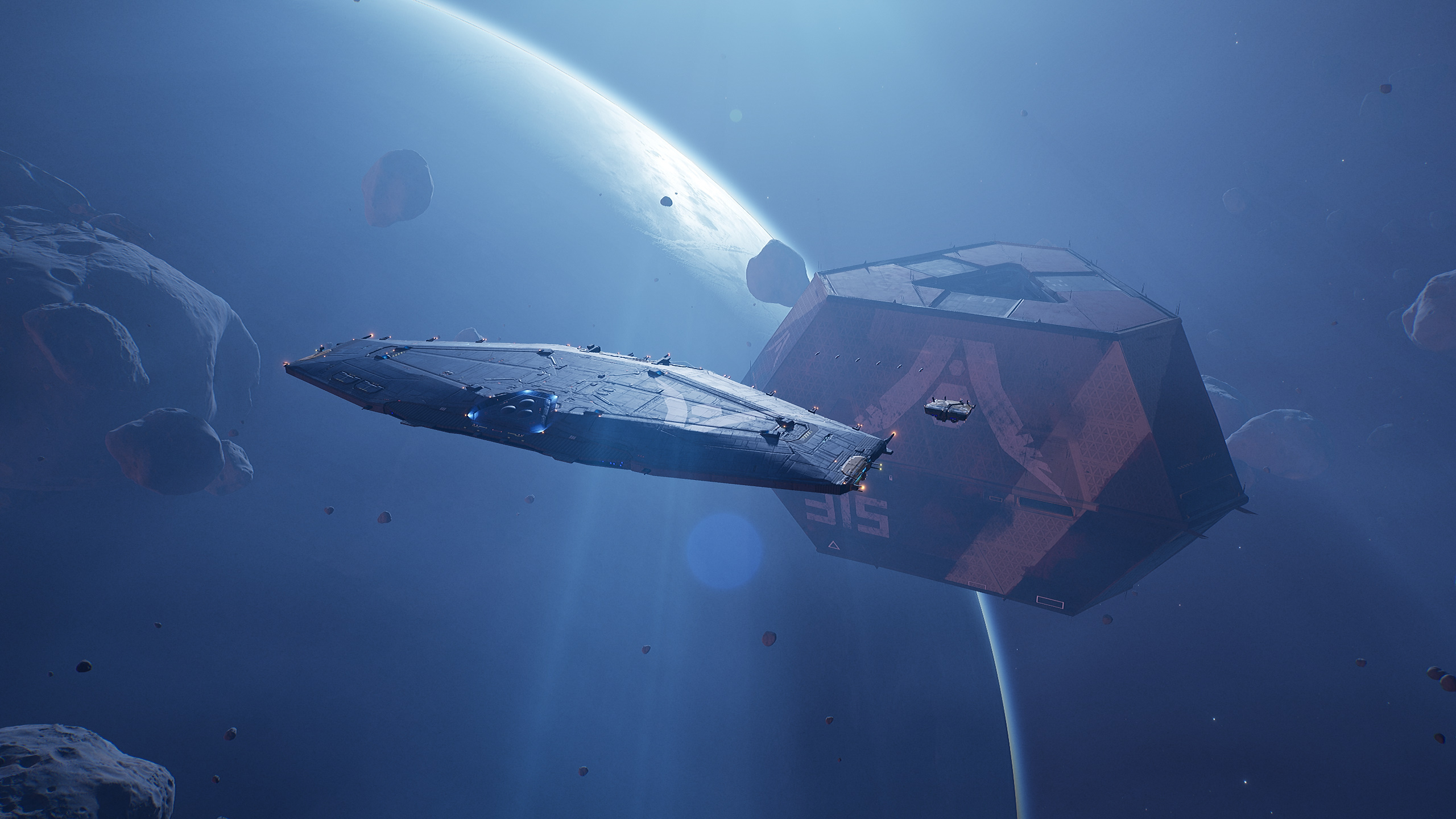 The second voice is that of a tactical officer on the ship, and this role is focused on contextual conversational chatter. This contextual flavor layer is full of character, only audible within a certain range from the ship, and designed to breathe life into the vacuum of space.
In both the writing and the design of speech events, an important guiding principle is that ships are not responding to the player. They are responding to each other. From this perspective, certain things become obvious:
The second voice is that of a tactical officer on the ship, and this role is focused on contextual conversational chatter. This contextual flavor layer is full of character, only audible within a certain range from the ship, and designed to breathe life into the vacuum of space.
In both the writing and the design of speech events, an important guiding principle is that ships are not responding to the player. They are responding to each other. From this perspective, certain things become obvious:
- Chatter should happen regardless of whether the player is close enough to hear it.
- You should be able to stumble into the middle of a conversation between units.
- If units are talking to each other, then both sides should be participating.