War Games: Keeping You On Your Toes
I think Lance put it best when he said Homeworld 3 is built using the rule of thirds. One third is the Homeworld you know and love. One third is better — technical innovations, graphics, and accessibility features that bring Homeworld into the modern era. And one third is something entirely new. Something like War Games. War Games blends RTS games and roguelikes to create something entirely new. Either alone or with two friends, you brave a series of randomized combat encounters and outfit your armadas with game-breakingly powerful upgrades to turn the tides against relentless enemy assaults. Like any good roguelike, our hope is that the seemingly endless permutations of upgrades, fleet compositions, objectives, and bosses results in an experience that keeps you and your friends saying “One more run?”. But how do we achieve that exactly? Well, let me tell you about Artifacts. [previewyoutube=I78ax1FzRgc;full][/previewyoutube] Artifacts are the big experience-defining system of War Games. If you’ve played other roguelikes, you might know these as boons, relics, or auras. Whatever you call them, they have one purpose: break the rules of the game you’re playing in spectacular ways. In War Games, an Artifact might result in something small — like giving your strikecraft some bonus speed. Or it might be something that turns your whole combat strategy on its head as your slow, tanky Assault Frigates transform into destructive close-quarter bruisers you send screaming into the enemy frontline. Artifacts are, mostly, grouped into what I called Patterns and Upgrades. If Homeworld 3 were a fantasy RPG, then:- A Pattern is like your ship’s class — it describes what that ship can do and where its strengths and weaknesses are. Applying a Pattern to a ship can radically change its capabilities, like turning those aforementioned Assault Frigates into deadly frontline brawlers with the Berserker Pattern.
- Upgrades then let you specialize that Pattern (or class). Instead of being a total overhaul, Upgrades zero in on a specific characteristic and enhance or tweak it. You might enhance a ship’s speed or range, or give it a special ability, for example.
 This is a purely optional feature aimed at those who want more spice in their War Games. Before embarking on a run, you can set the difficulty to one of 10 different tiers. Each tier adds a unique modifier that’ll change the game up in some unfavorable (but exciting) ways. The kicker is that higher difficulty tiers also include the lower-tier modifiers. If you just want a pinch of spice, you might select Difficulty Tier 1, which results in larger waves of enemies to contend with throughout your run.
Climb the tiers, and those modifiers start to stack up in some grueling ways. One reduces the quantity of RUs in the engagement zone, making every loss sting just a little bit more. Another adds a second objective to a specific mission, doubling the work needed to achieve victory (and the likelihood you won’t). As you push yourself into higher difficulties, the pressure will slowly increase until you’re taking on missions that only The Demigods of RTS Games will be able to conquer.
It won’t ever be mandatory to engage with the difficulty system. You won’t need to worry about missing out on certain Artifacts, Fleets, or levels — all of that is unlockable regardless of what difficulty you play on. There will be some aesthetic rewards, though, like special profile pictures that’ll signal your mastery of War Games. This new difficulty mode gives you the option of adding some hot sauce to this tactical burrito — how hot is entirely up to you. If you win five runs of War Games in a row, maybe try the next difficulty up. It just might add a little more spice — one more thing to consider when choosing Artifacts or your approach to an objective. Another complication to encounter, adapt, and overcome.
This is a purely optional feature aimed at those who want more spice in their War Games. Before embarking on a run, you can set the difficulty to one of 10 different tiers. Each tier adds a unique modifier that’ll change the game up in some unfavorable (but exciting) ways. The kicker is that higher difficulty tiers also include the lower-tier modifiers. If you just want a pinch of spice, you might select Difficulty Tier 1, which results in larger waves of enemies to contend with throughout your run.
Climb the tiers, and those modifiers start to stack up in some grueling ways. One reduces the quantity of RUs in the engagement zone, making every loss sting just a little bit more. Another adds a second objective to a specific mission, doubling the work needed to achieve victory (and the likelihood you won’t). As you push yourself into higher difficulties, the pressure will slowly increase until you’re taking on missions that only The Demigods of RTS Games will be able to conquer.
It won’t ever be mandatory to engage with the difficulty system. You won’t need to worry about missing out on certain Artifacts, Fleets, or levels — all of that is unlockable regardless of what difficulty you play on. There will be some aesthetic rewards, though, like special profile pictures that’ll signal your mastery of War Games. This new difficulty mode gives you the option of adding some hot sauce to this tactical burrito — how hot is entirely up to you. If you win five runs of War Games in a row, maybe try the next difficulty up. It just might add a little more spice — one more thing to consider when choosing Artifacts or your approach to an objective. Another complication to encounter, adapt, and overcome.
Skirmish Mode: Unveiled
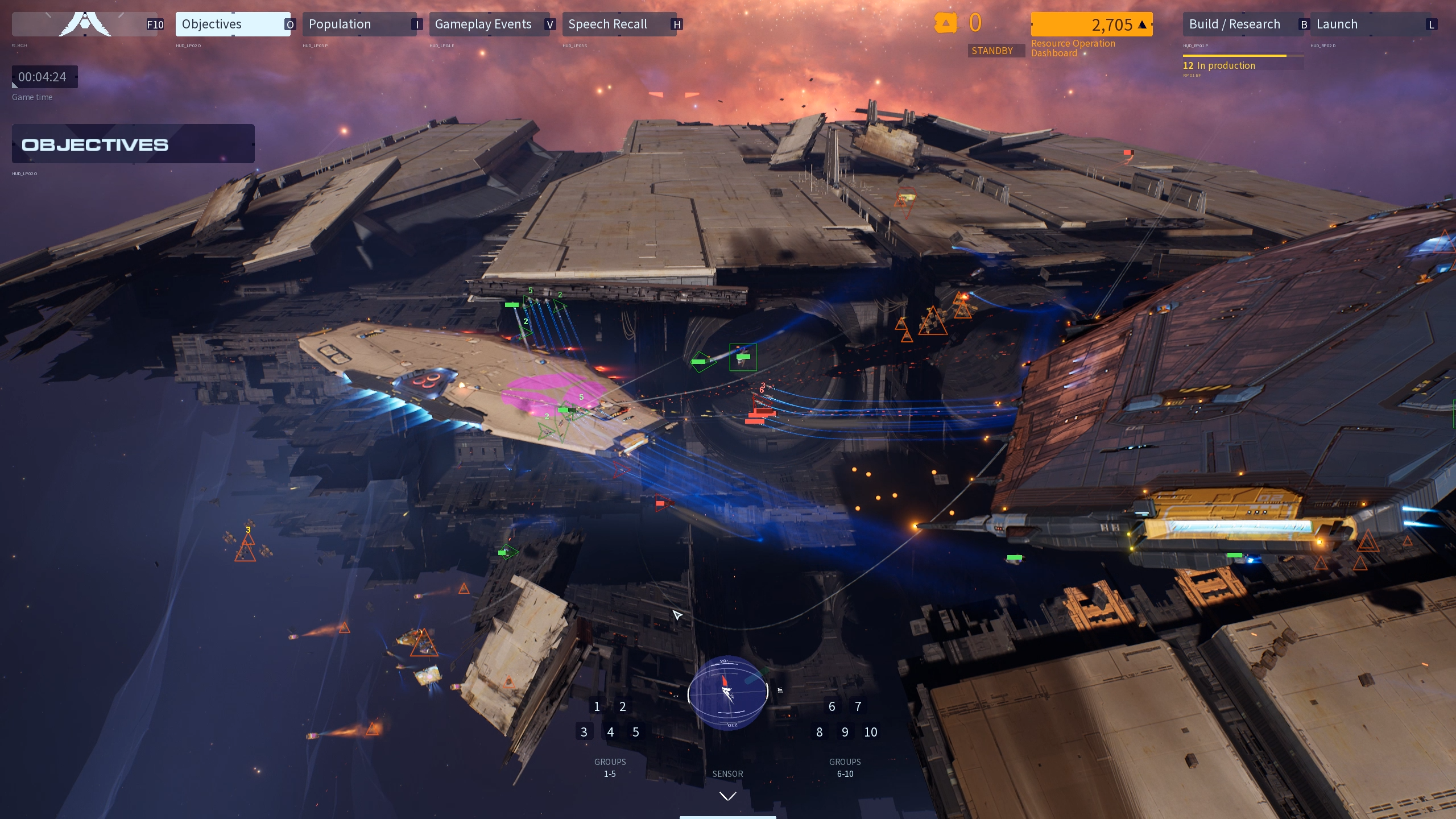
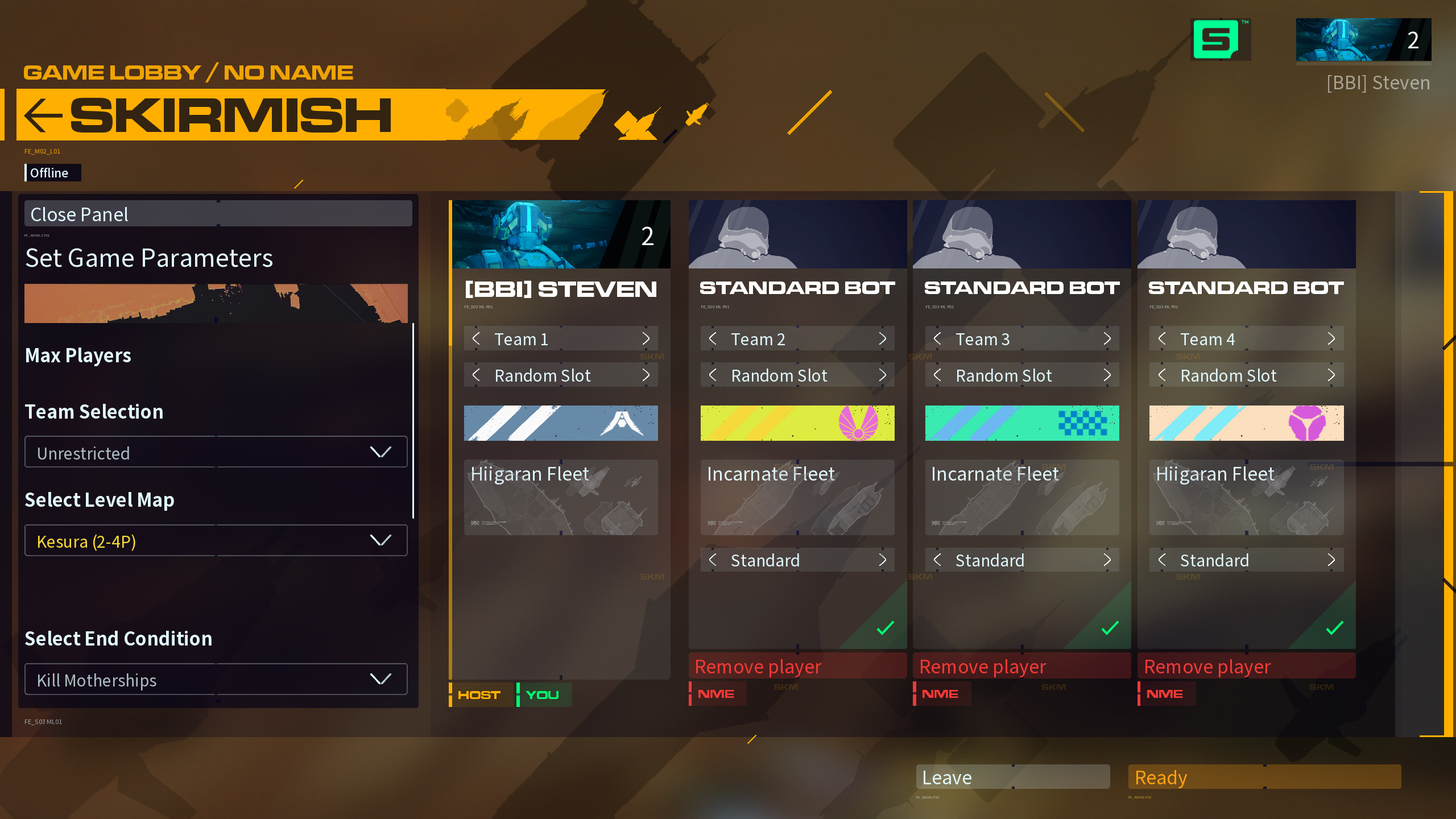
While War Games offers an innovative and fresh way to play Homeworld, there’s also nothing quite like the thrill of clashing against a human opponent — or a good old fashioned comp stomp. Skirmish Mode has been a staple of Homeworld since the very beginning, so there was never any doubt that we’d want to include it in Homeworld 3 For the uninitiated, Skirmish Mode is where you can go head to head against friends, strangers, and the computer in classic deathmatch-style brawls. In Homeworld 3, Skirmish Mode supports up to a max of six players and you can set teams freely. Engage in a chaotic free-for-all, square off in 2v2v2 or 3v3 — or go with some other permutation like 4v2 or 5v1. You can also substitute in computer players with differing difficulty levels or adjust settings like how many resources players start with or whether the game ends when your mothership is destroyed.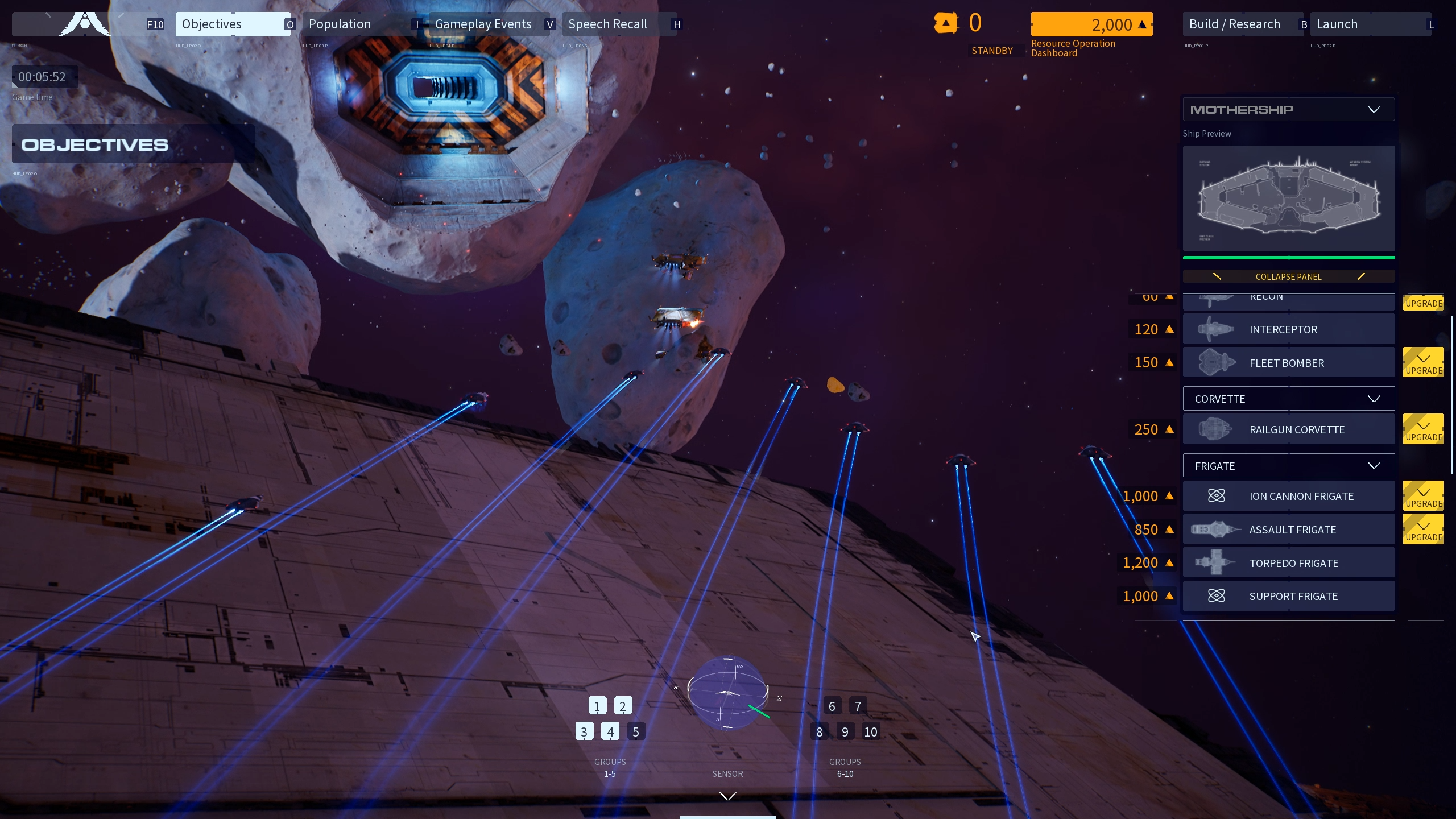 All of this is supported by matchmaking, which has filters to help you find the exact type of Skirmish you’re looking for along with geographic filters to control what regions you’re playing in.
When Homeworld 3 launches, we’re going to have eight skirmish maps available to fight in — each one a unique battlefield with its own terrain and layout that you’ll learn to exploit as your fleets clash with opposing teams. But, thanks to our partnership with Mod.io, you’ll soon have dozens (if not many more) Skirmish maps to choose from thanks to our brilliant community of modders.
Regardless of what platform you’re playing on, the in-game Mod.io browser will let you seamlessly download custom, player-made Skirmish maps anyone can make using the Unreal Editor. If you’ve never modded before, we’ll also provide some light documentation that’ll teach you how to make your own Skirmish maps. While we won’t officially support any mods beyond Skirmish maps, intrepid modders are welcome to use the Unreal Editor to experiment and dig even deeper.
All of this is supported by matchmaking, which has filters to help you find the exact type of Skirmish you’re looking for along with geographic filters to control what regions you’re playing in.
When Homeworld 3 launches, we’re going to have eight skirmish maps available to fight in — each one a unique battlefield with its own terrain and layout that you’ll learn to exploit as your fleets clash with opposing teams. But, thanks to our partnership with Mod.io, you’ll soon have dozens (if not many more) Skirmish maps to choose from thanks to our brilliant community of modders.
Regardless of what platform you’re playing on, the in-game Mod.io browser will let you seamlessly download custom, player-made Skirmish maps anyone can make using the Unreal Editor. If you’ve never modded before, we’ll also provide some light documentation that’ll teach you how to make your own Skirmish maps. While we won’t officially support any mods beyond Skirmish maps, intrepid modders are welcome to use the Unreal Editor to experiment and dig even deeper.
 One final reason you may want to venture into Skirmish mode is because it’s also where you can play as the other major faction in Homeworld 3: The Incarnate. We’ve been tight-lipped about this enigmatic armada because of their role in Homeworld 3’s story, but what I will say is that Incarnate fleets present a unique departure from the strategies and strengths of the Hiigaran navy. You’ve heard of strength in numbers, right? Well, Incarnate flip that philosophy around with an emphasis on Corvettes that can dish — and take — a beating. There’s plenty of fun nuances to discover with Incarnate ships, like Resource Collectors with a special ability that’ll make them useful in a fight.
[previewyoutube=9C7cJqC4MS8;full][/previewyoutube]
One final reason you may want to venture into Skirmish mode is because it’s also where you can play as the other major faction in Homeworld 3: The Incarnate. We’ve been tight-lipped about this enigmatic armada because of their role in Homeworld 3’s story, but what I will say is that Incarnate fleets present a unique departure from the strategies and strengths of the Hiigaran navy. You’ve heard of strength in numbers, right? Well, Incarnate flip that philosophy around with an emphasis on Corvettes that can dish — and take — a beating. There’s plenty of fun nuances to discover with Incarnate ships, like Resource Collectors with a special ability that’ll make them useful in a fight.
[previewyoutube=9C7cJqC4MS8;full][/previewyoutube]