Combat
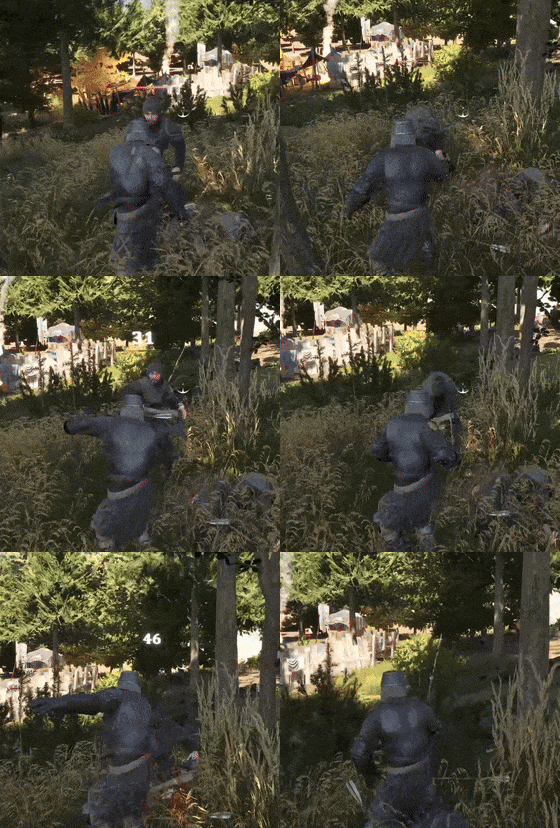
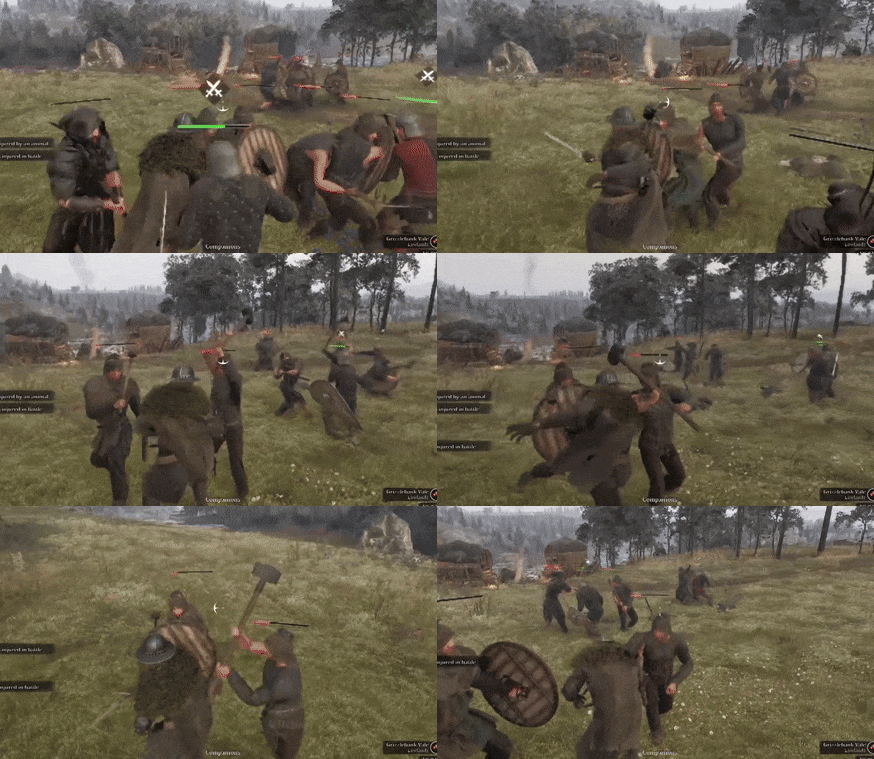
Let’s get into it. Bellwright uses a directional melee combat system with four attack and block directions, similar to the Mount and Blade series. Placing your cursor in one of the four areas of the screen and pressing LMB (or whatever you have bound to Attack) initiates an attack from that direction. Likewise, holding RMB in a direction blocks incoming attacks from enemies. There are two blocking modes - fluid (default) and non-fluid, which can be toggled in game settings. Non-fluid blocking requires you to press RMB each time you want to block, while fluid blocking allows you to hold RMB and drag it around to intercept incoming attacks from whichever direction they are coming. If you are using fluid blocking and hold RMB and LMB at the same time, it will lock your block in place, so that you can orient your camera in different directions and move around without your block position changing.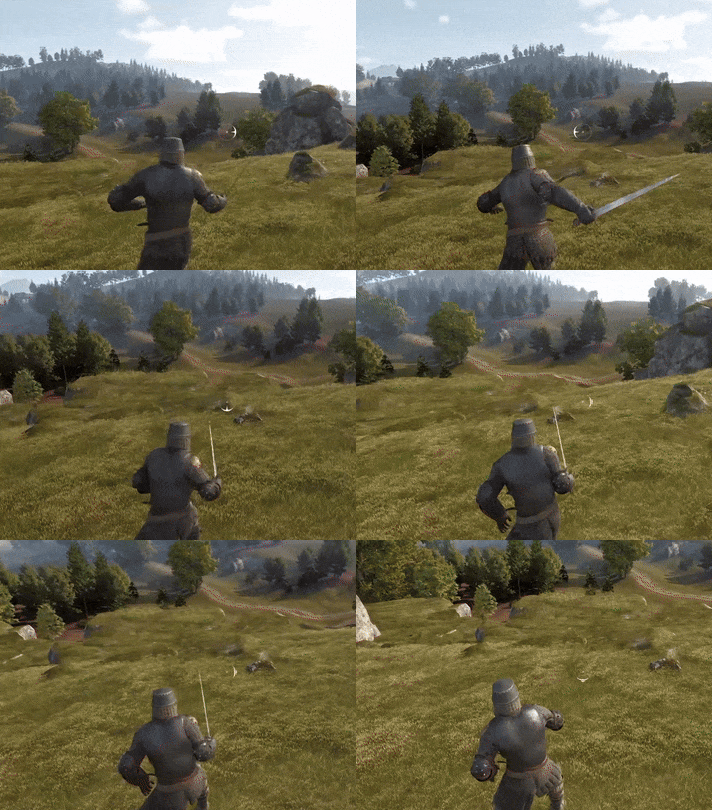 Holding LMB charges up your attack which increases the damage. Many factors go into the amount of damage you do on a given swing, including the armor and weapon values, the relationship between the type of armor you’re fighting and the weapon type you’re using, the length of your hold, and where in the arch of the swing you make contact. Hitting early or late in your swing will result in reduced damage.
You can feint by canceling your current attack using RMB and initiating another attack from a different direction. However, if you wait until too far into your swing, you won’t be able to cancel it. This is helpful when you have initiated a swing into a direction that you see an enemy is already blocking. You can feint to try to make them miss their next block.
Lastly, we have a riposte mechanic (commonly referred to as a “chamber” in this genre). To do this, you must attack in the direction from which you are receiving an attack. If you time it correctly, you can both block an incoming attack and initiate your own attack. It can be especially helpful when fighting outnumbered, to regain the initiative when you are under heavy pressure.
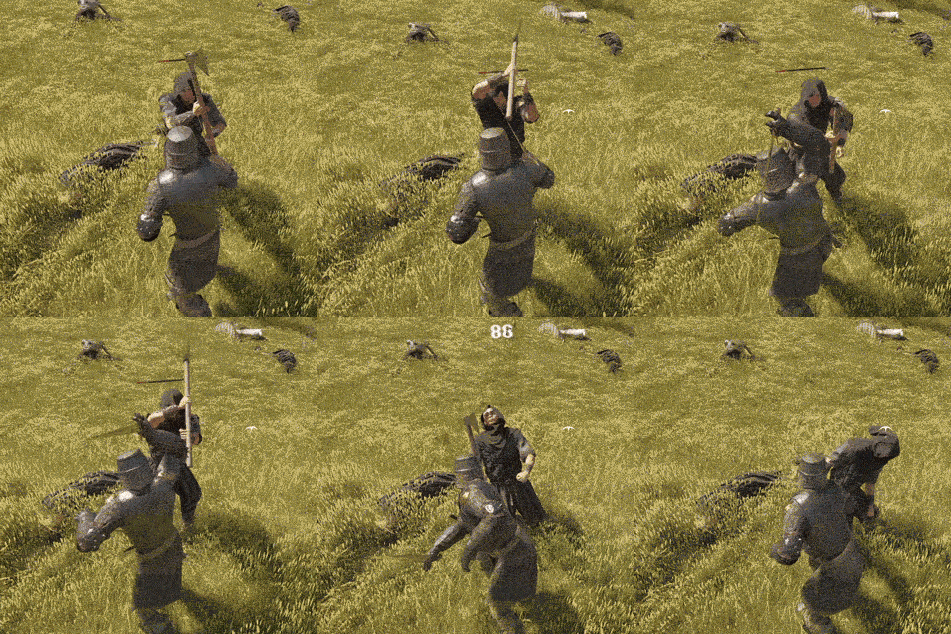
Holding LMB charges up your attack which increases the damage. Many factors go into the amount of damage you do on a given swing, including the armor and weapon values, the relationship between the type of armor you’re fighting and the weapon type you’re using, the length of your hold, and where in the arch of the swing you make contact. Hitting early or late in your swing will result in reduced damage.
You can feint by canceling your current attack using RMB and initiating another attack from a different direction. However, if you wait until too far into your swing, you won’t be able to cancel it. This is helpful when you have initiated a swing into a direction that you see an enemy is already blocking. You can feint to try to make them miss their next block.
Lastly, we have a riposte mechanic (commonly referred to as a “chamber” in this genre). To do this, you must attack in the direction from which you are receiving an attack. If you time it correctly, you can both block an incoming attack and initiate your own attack. It can be especially helpful when fighting outnumbered, to regain the initiative when you are under heavy pressure.
 There are numerous other mechanics that exist out there, many of which we’re excited to try (and maybe even have prototypes for ????) However, we’re interested to know what you want to see. Keep leaving your feedback, it’s invaluable to us. We’re currently working on enabling the ability for the player to engage in practice fights, with both your villagers and other players in co-op. We understand that mastery of the mechanics is something that can be fun and rewarding, but not when you have to spend 10 minutes running back to pick up your stuff after you die or when you die immediately after starting a fight. In addition, we’re working on improving the Training Groups which will extend the practice fight mechanic and allow your NPCs to passively train their skills.