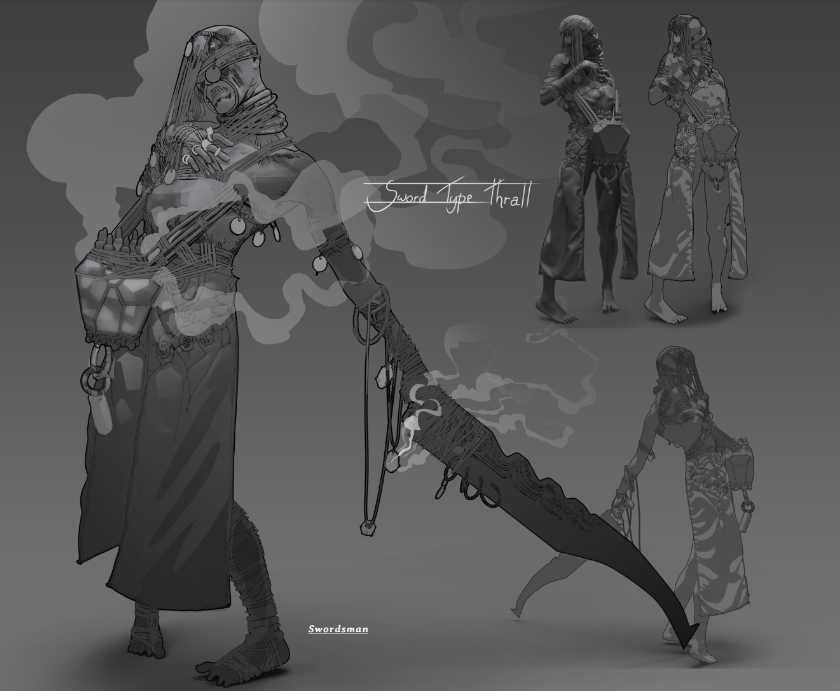
 This image by Casper Konefal was where we knew we now had the main themes for our Bound look. Even though we changed the origin from human to bestial in nature (as a result of the change in origin story), the visual language defined here became the lasting template that we still refer to today when starting any new Bound archetype.
[b]How did the early development of the Bound change their design?[/b]
The Bound Minions were the first enemy type we playtested with. The core idea of these enemies hasn’t changed much, but the art direction for The Bound took off from this point. We iterated off of some initial in-game models until we got to the Bound Minions that you see today. As development and playtesting continued, we evolved the Bound Minions into different enemy types.
Looking at Nightingale today, the palette of distinct Bound types has now flourished into a diverse set of enemies that can operate independently or as a collaborative group.
This image by Casper Konefal was where we knew we now had the main themes for our Bound look. Even though we changed the origin from human to bestial in nature (as a result of the change in origin story), the visual language defined here became the lasting template that we still refer to today when starting any new Bound archetype.
[b]How did the early development of the Bound change their design?[/b]
The Bound Minions were the first enemy type we playtested with. The core idea of these enemies hasn’t changed much, but the art direction for The Bound took off from this point. We iterated off of some initial in-game models until we got to the Bound Minions that you see today. As development and playtesting continued, we evolved the Bound Minions into different enemy types.
Looking at Nightingale today, the palette of distinct Bound types has now flourished into a diverse set of enemies that can operate independently or as a collaborative group.
 [b]What is the object or goal of the Bound design? What story are you trying to tell?[/b]
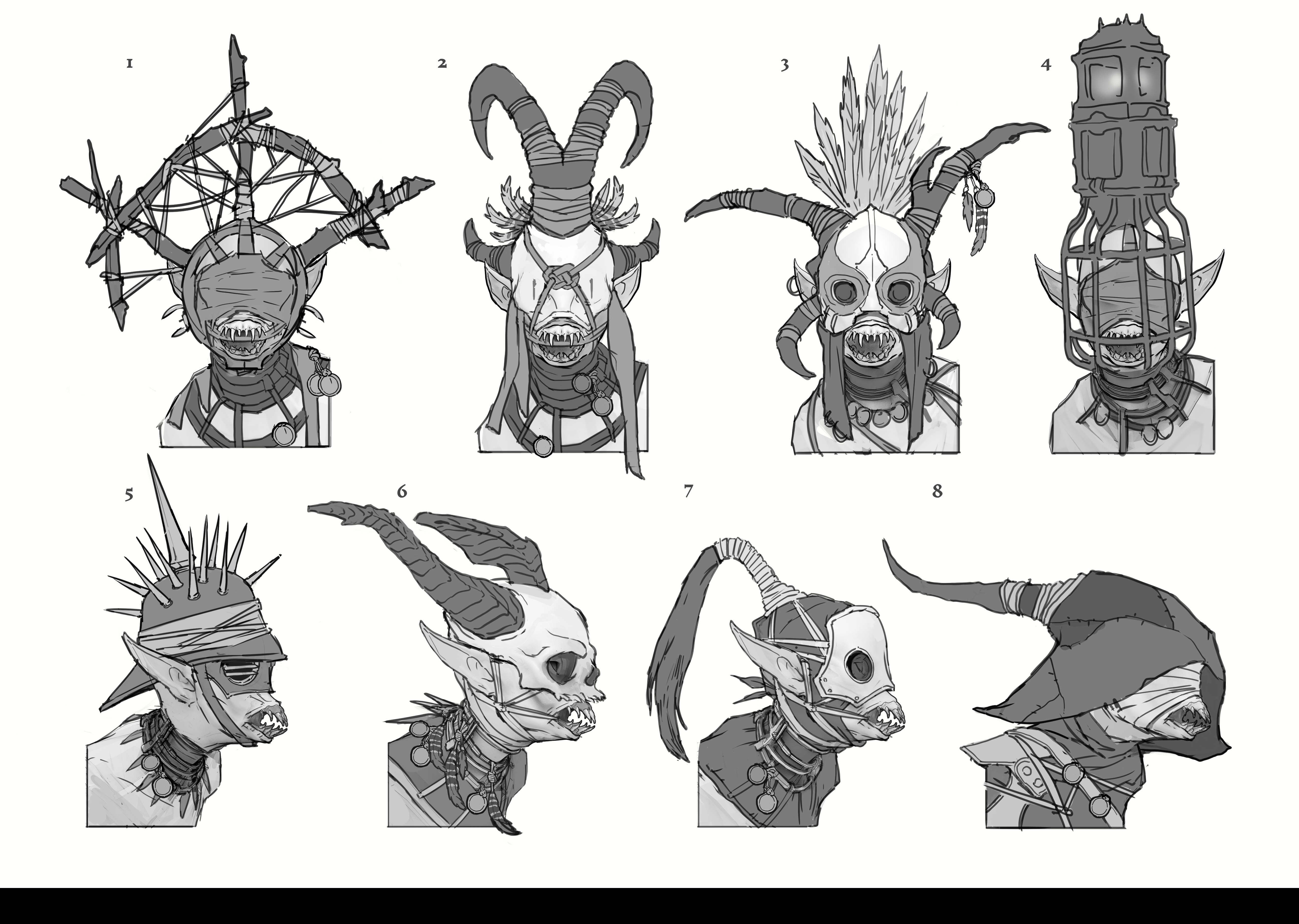
The Bound are unified by their aggression and strange ligatures on their skin. The idea behind their evolution is that Minions become Bound Lanterns and other minion types. We wanted The Bound to have a unique bestial quality yet appear capable of metamorphosis into the tougher variants.When we moved away from the initial backstory, we wanted the Bound to signify a soulless appearance, propped up by Fae magic. While these enemies have a physical form, they are an enemy that powerful Fae have created to prevent Realmwalkers from growing in strength.
One thing will always remain true with any Bound archetype: to be Bound is to be in pain, hence the uncomfortable posing and binding of limbs. If it’s not uncomfortable, it’s not Bound.
--------------------------------------------------------------------------------------------------------------
Thanks, Neil! That’s all for this behind-the-scenes blog! Stay tuned for more creature features!
[b]What is the object or goal of the Bound design? What story are you trying to tell?[/b]
The Bound are unified by their aggression and strange ligatures on their skin. The idea behind their evolution is that Minions become Bound Lanterns and other minion types. We wanted The Bound to have a unique bestial quality yet appear capable of metamorphosis into the tougher variants.When we moved away from the initial backstory, we wanted the Bound to signify a soulless appearance, propped up by Fae magic. While these enemies have a physical form, they are an enemy that powerful Fae have created to prevent Realmwalkers from growing in strength.
One thing will always remain true with any Bound archetype: to be Bound is to be in pain, hence the uncomfortable posing and binding of limbs. If it’s not uncomfortable, it’s not Bound.
--------------------------------------------------------------------------------------------------------------
Thanks, Neil! That’s all for this behind-the-scenes blog! Stay tuned for more creature features!