Time of Day
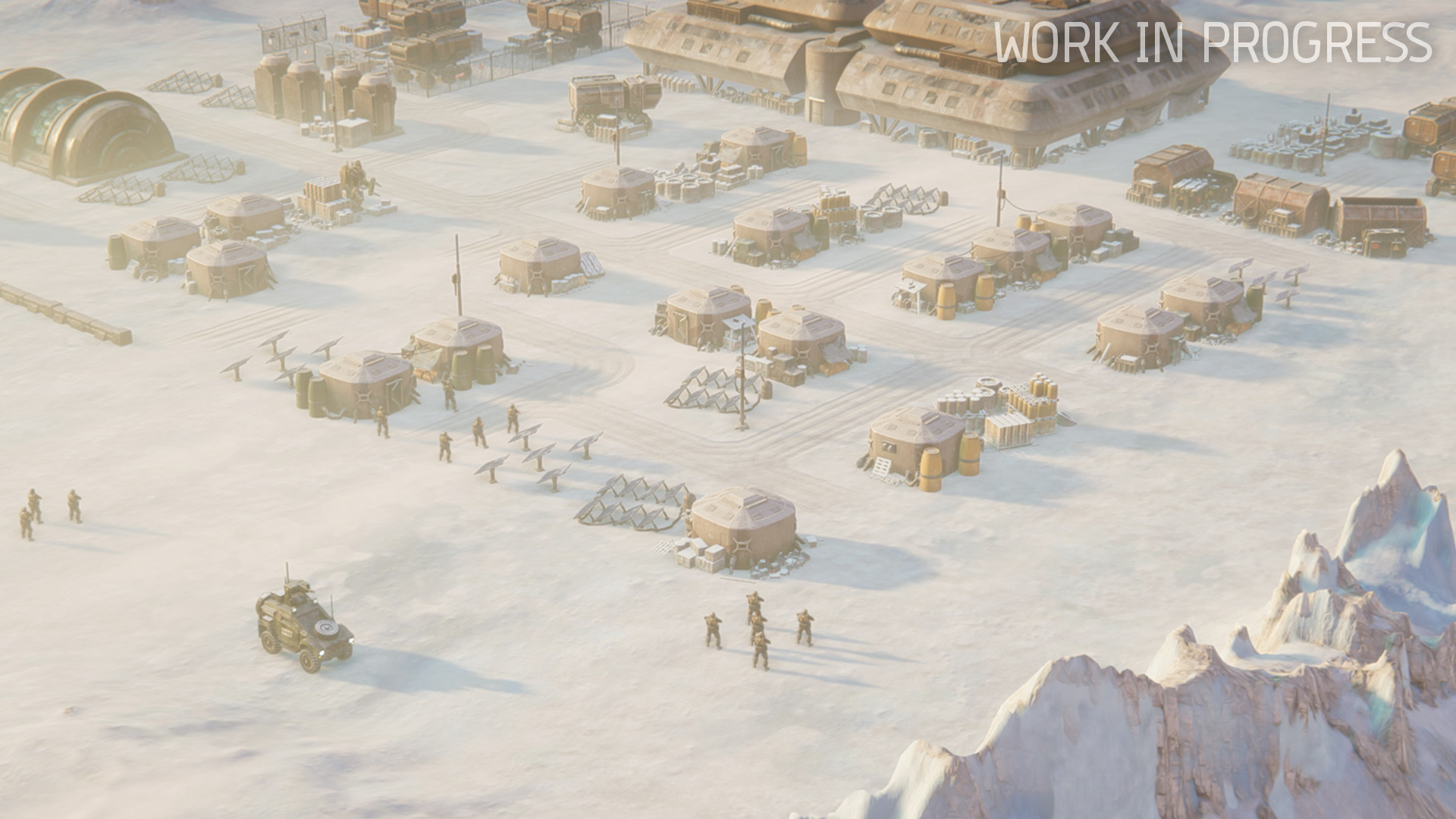
[hr][/hr]There will be four basic times of day at which combat can occur, and each has distinct lighting to make sure players quickly recognize which time it is. Even more importantly, the different light settings make the game look different each time and add a lot of visual variety to each biome. Also, the lighting is crucial in creating a fitting atmosphere for the game. The chance of fighting at a certain lighting time differs for each biome, with fights in normal daylight being much more common than fights at dusk, dawn, or night.Dawn Clear
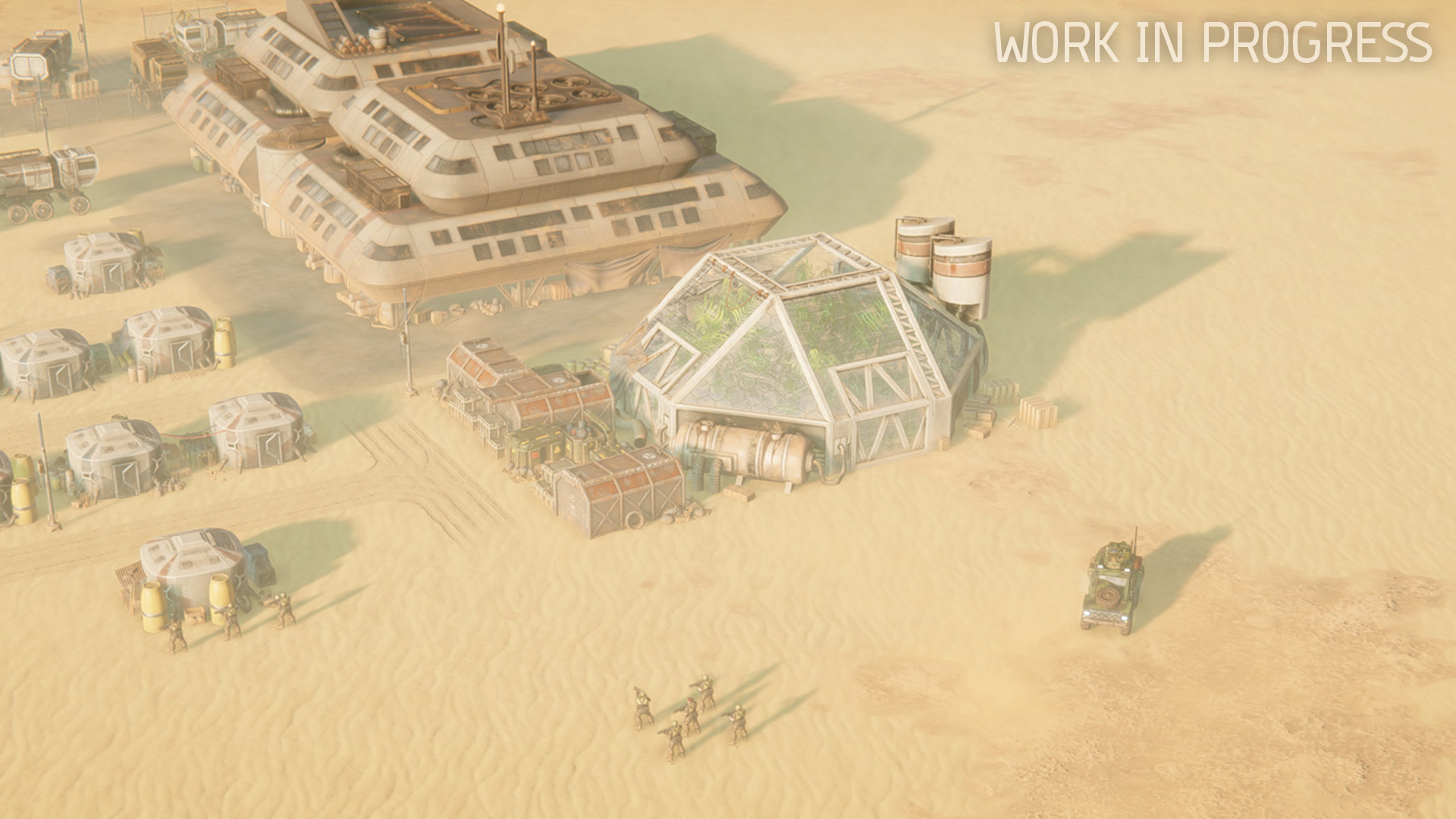
[hr][/hr]Early in the morning, the sun is typically very low and still weak. Its light is already yellow-orange but way lighter than at dusk. Shadows are light with a blue or even purple tint and, of course, very long. Mornings also often have a light fog as the humidity of the night evaporates under the increasing sunlight. In the game, there will be no special modifiers tied to dawn. Each biome will, of course, have its light setup for dusk: [b]Temperate Dawn Clear[/b]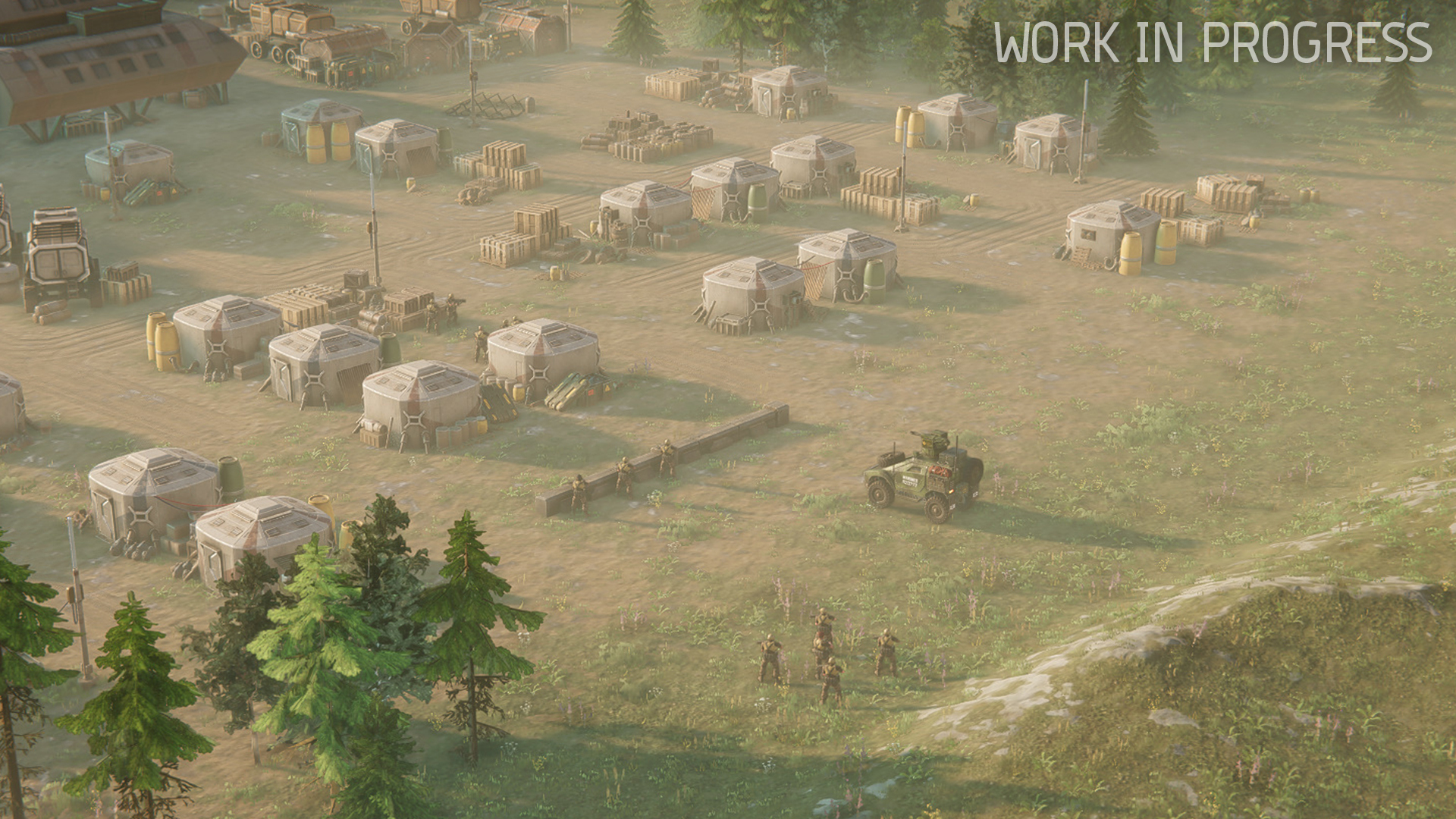 [b]Desert Dawn Clear[/b]
 [b]Snow Dawn Clear[/b]
Dawn Overcast
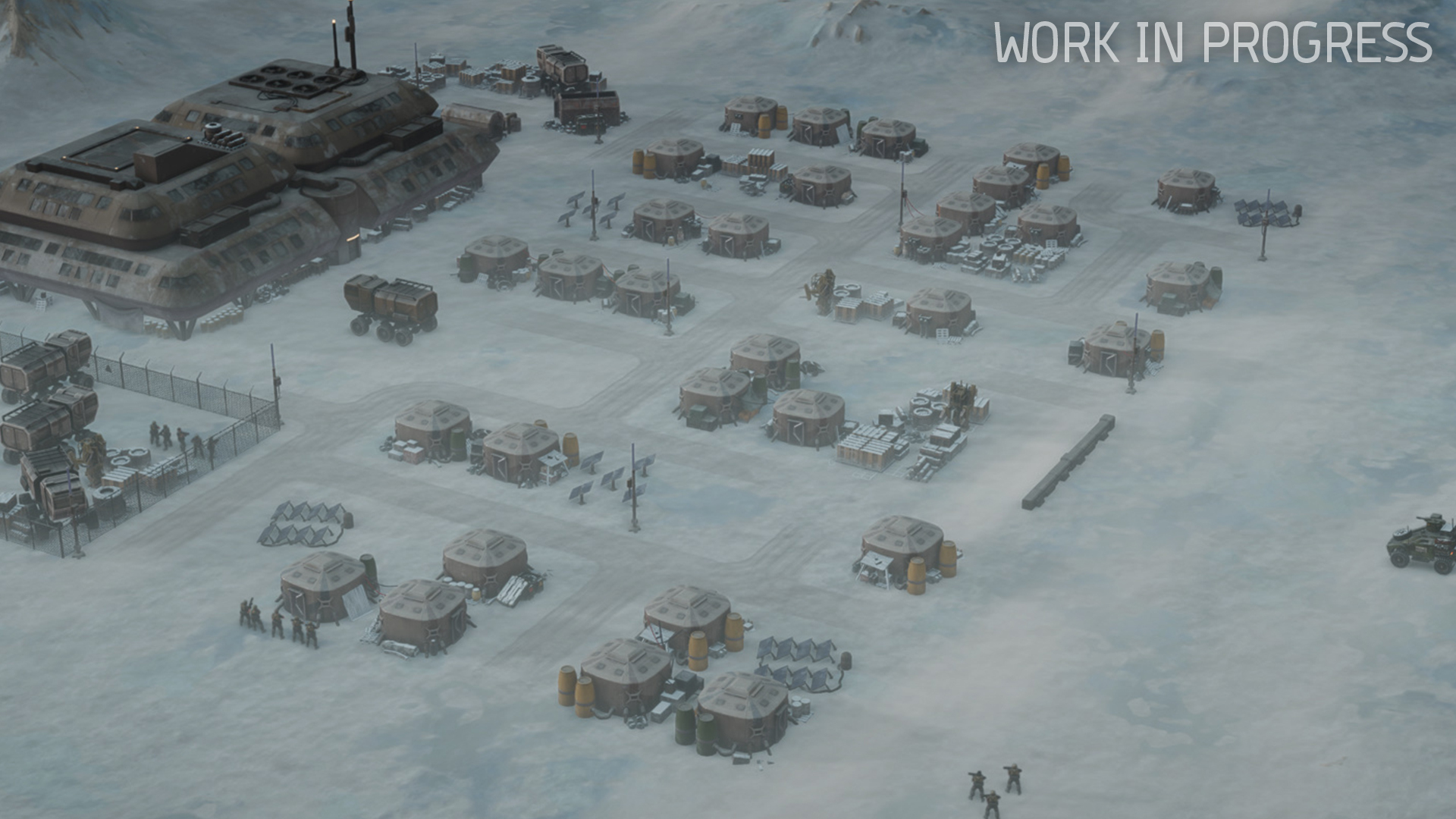
[hr][/hr]Each light setting has an alternative “overcast” variant. This means the sky is cloudy with no direct sunlight. This overcast state can also be used for additional weather effects, like rain or snow. Overcast light is a lot less direct and intense. Shadows are almost invisible, colors are desaturated, and the whole map is darker. Take a look at the overcast versions of the dusk lighting: [b]Temperate Dawn Overcast[/b]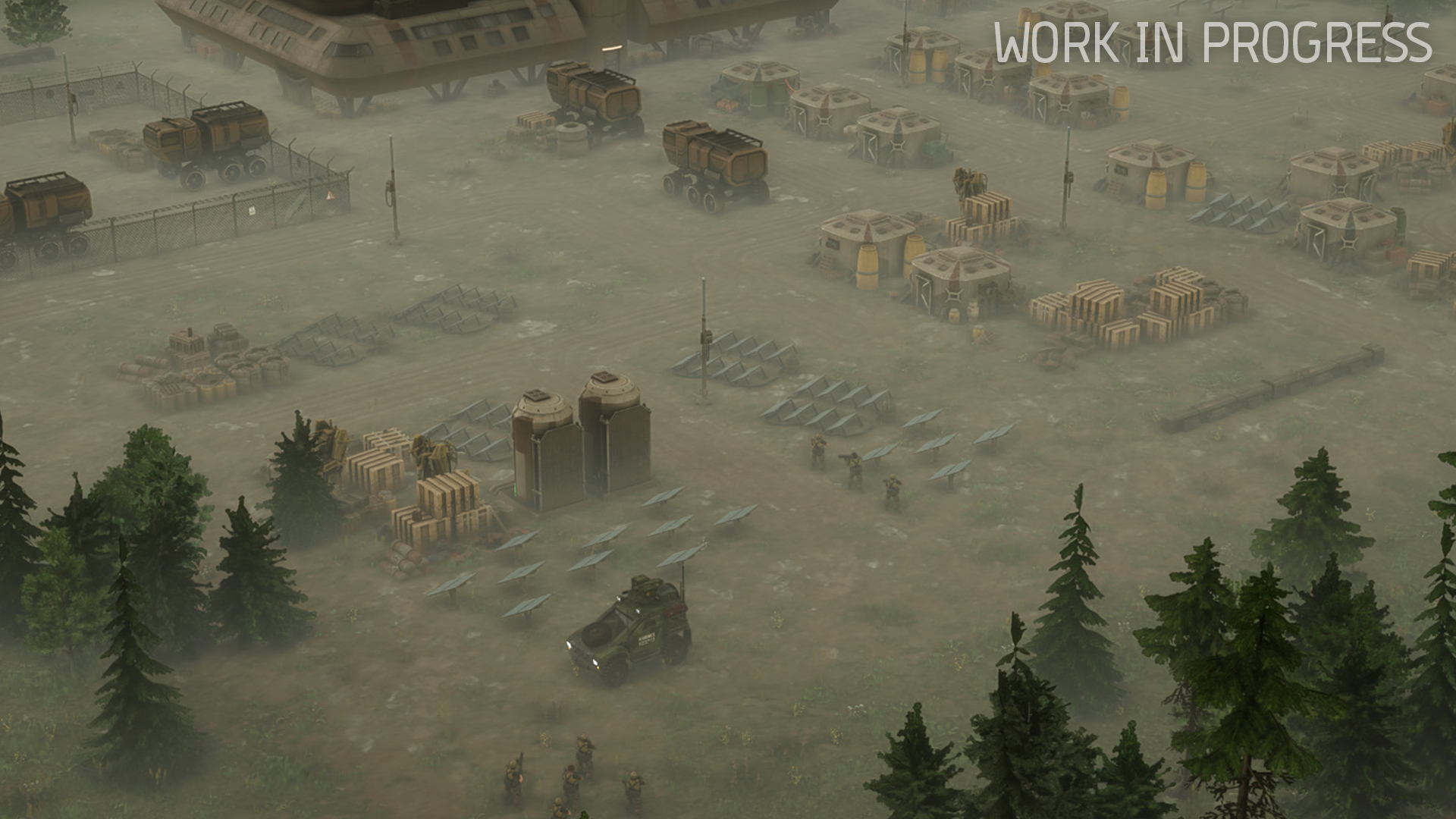 [b]Desert Dawn Overcast[/b]
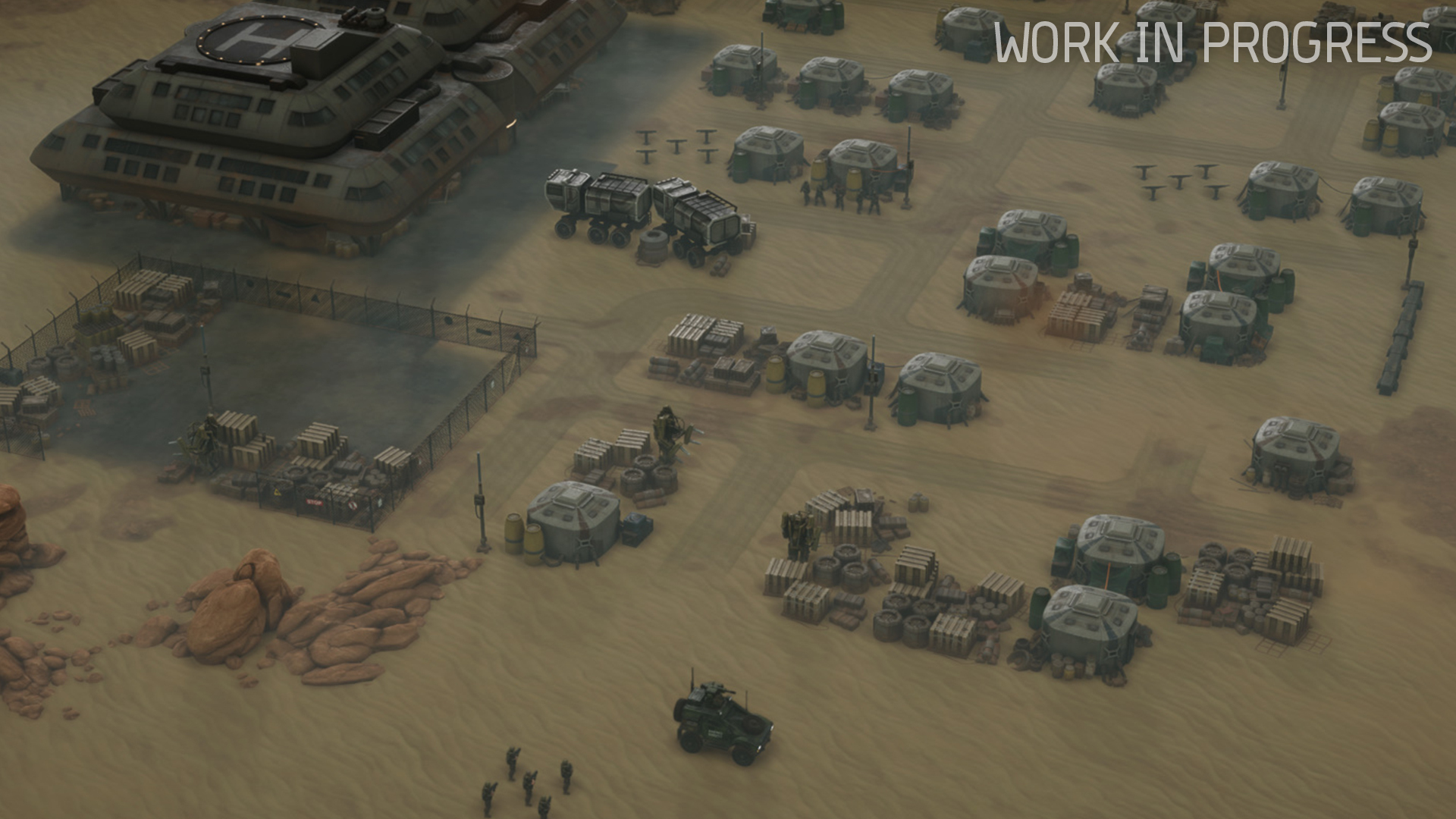 [b]Snow Dawn Overcast[/b]
Day Clear
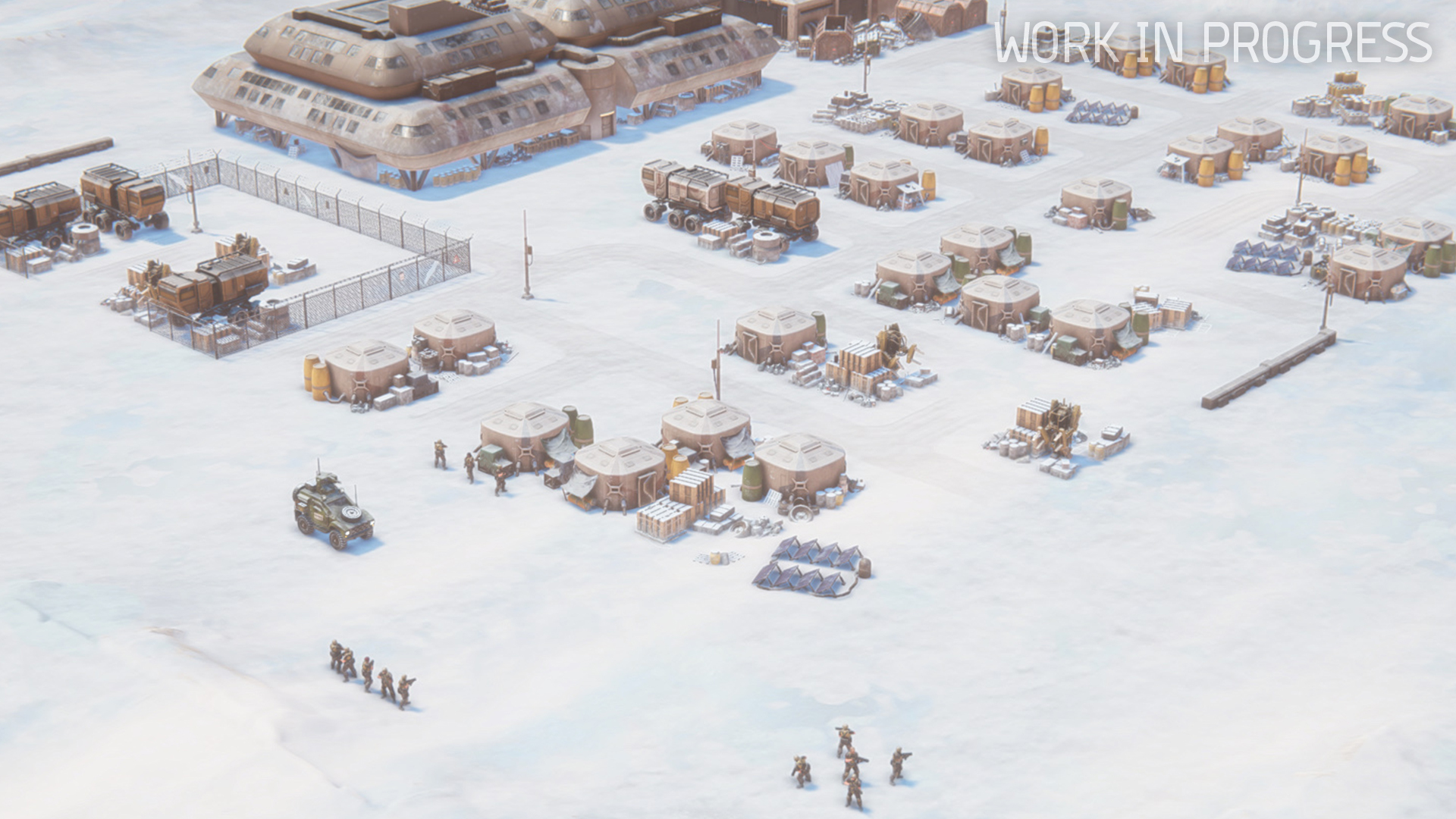
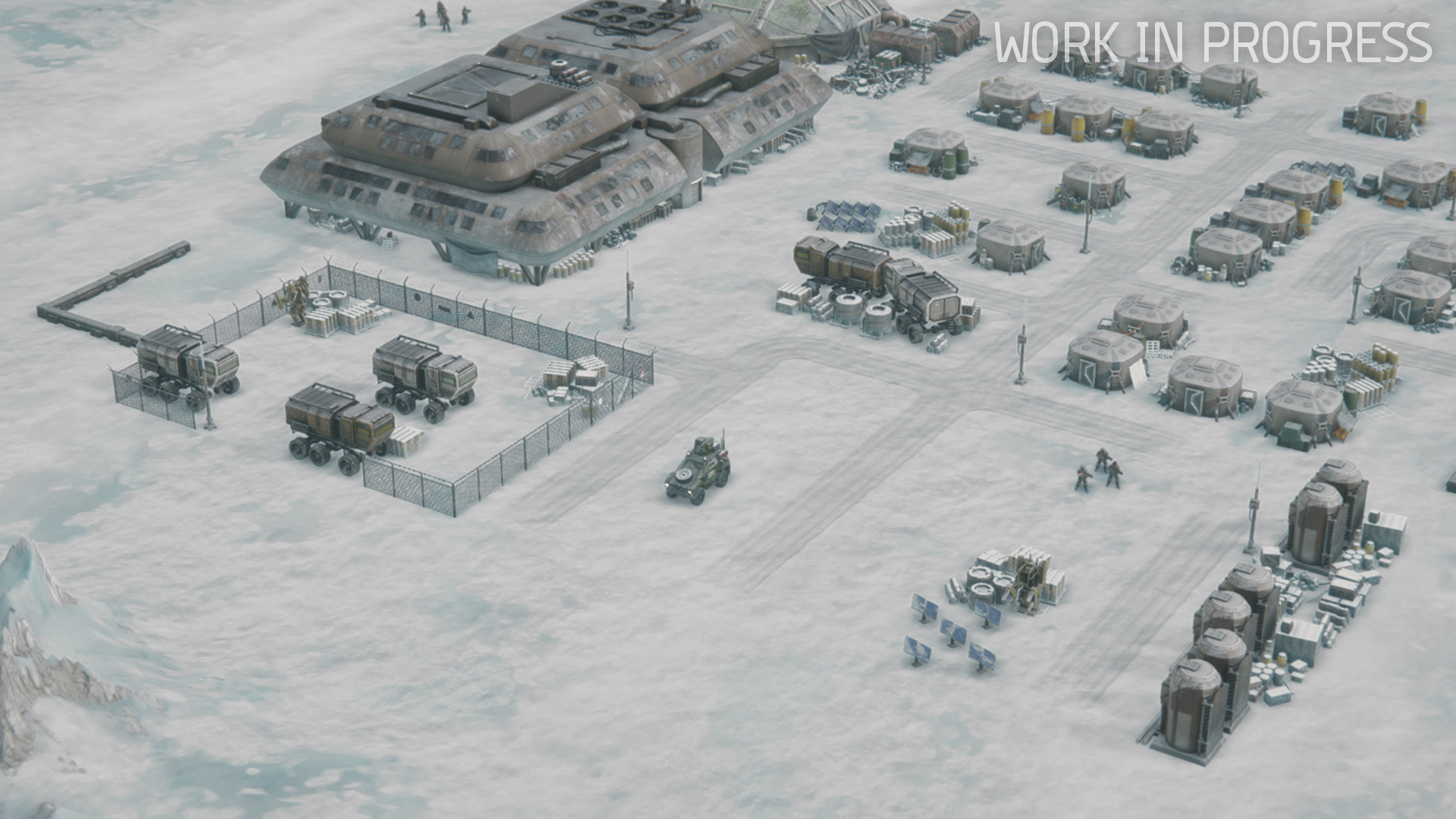
[hr][/hr]The classical daylight is the time at which most missions will be fought. The default setup here is very sunny, with the sun high on the horizon. Shadows are sharp, dark, and short. Colors are intense, and exposure and brightness are high. This lighting will not affect combat. [b]Temperate Day Clear[/b]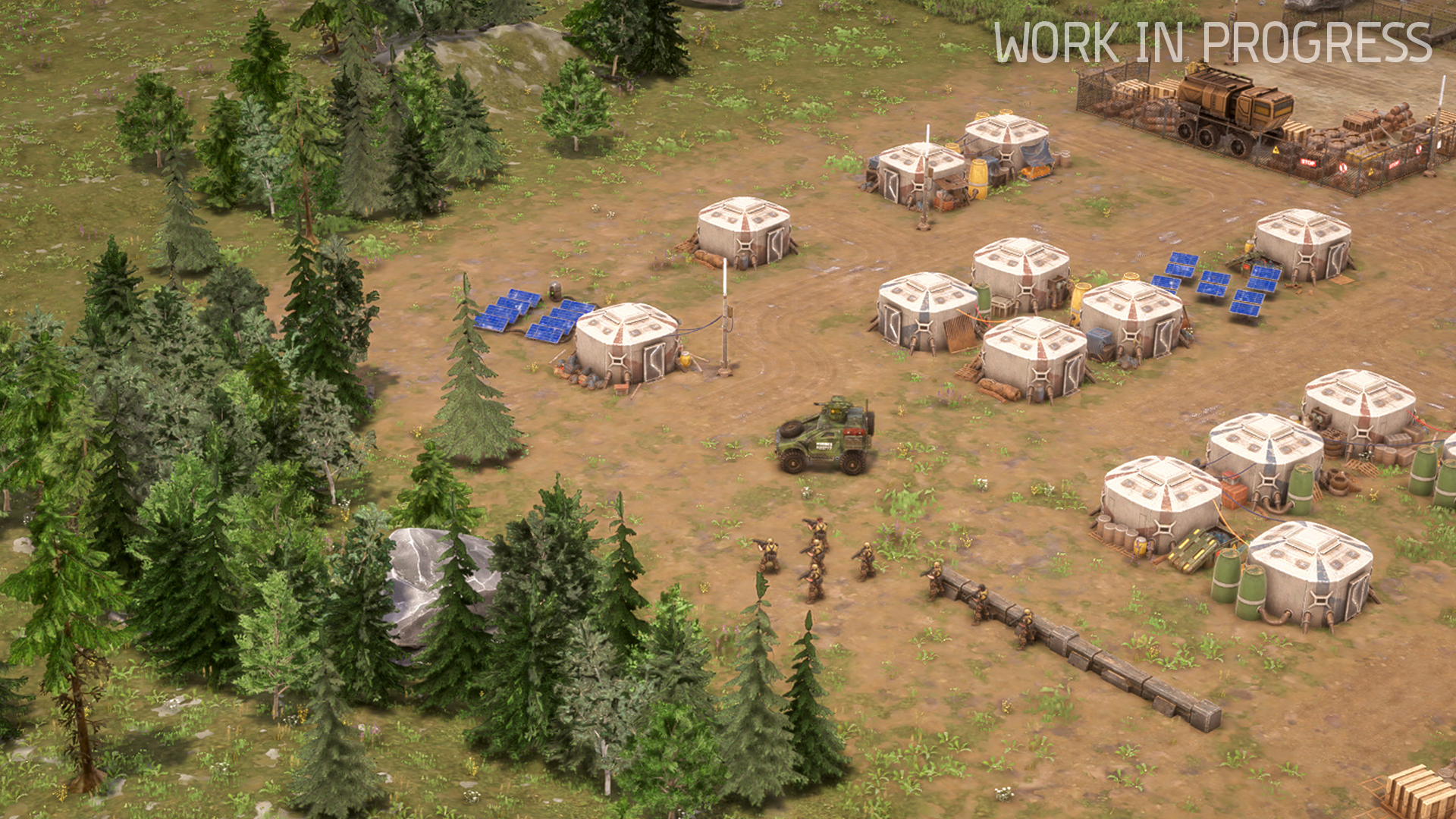 [b]Desert Day Clear[/b]
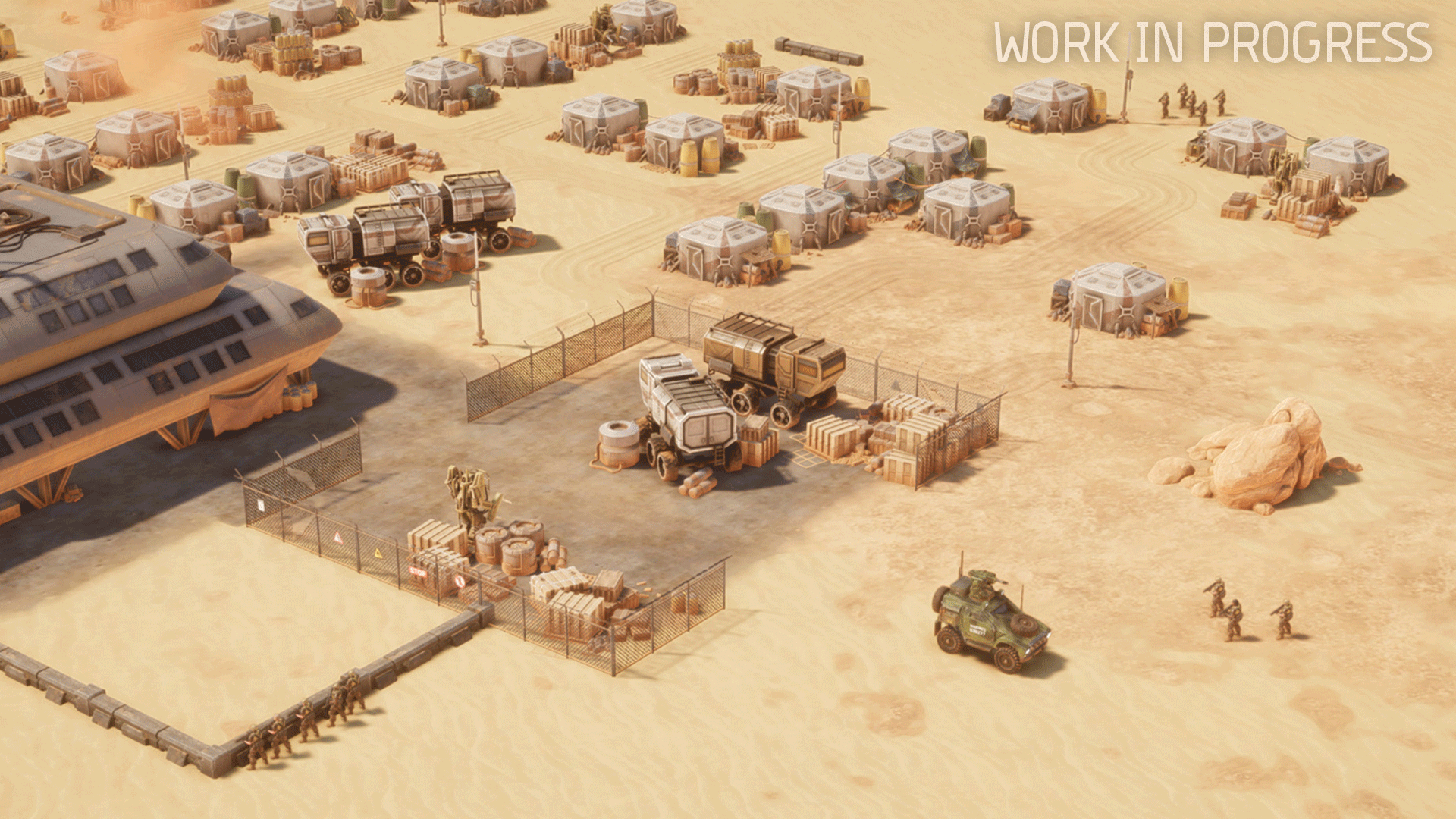 [b]Snow Day Clear[/b]
Day Overcast
[hr][/hr]As for all other lighting, we also do have an overcast version of daylight, which helps create a gloomy atmosphere for weather effects like rain as well: [b]Temperate Day Overcast[/b]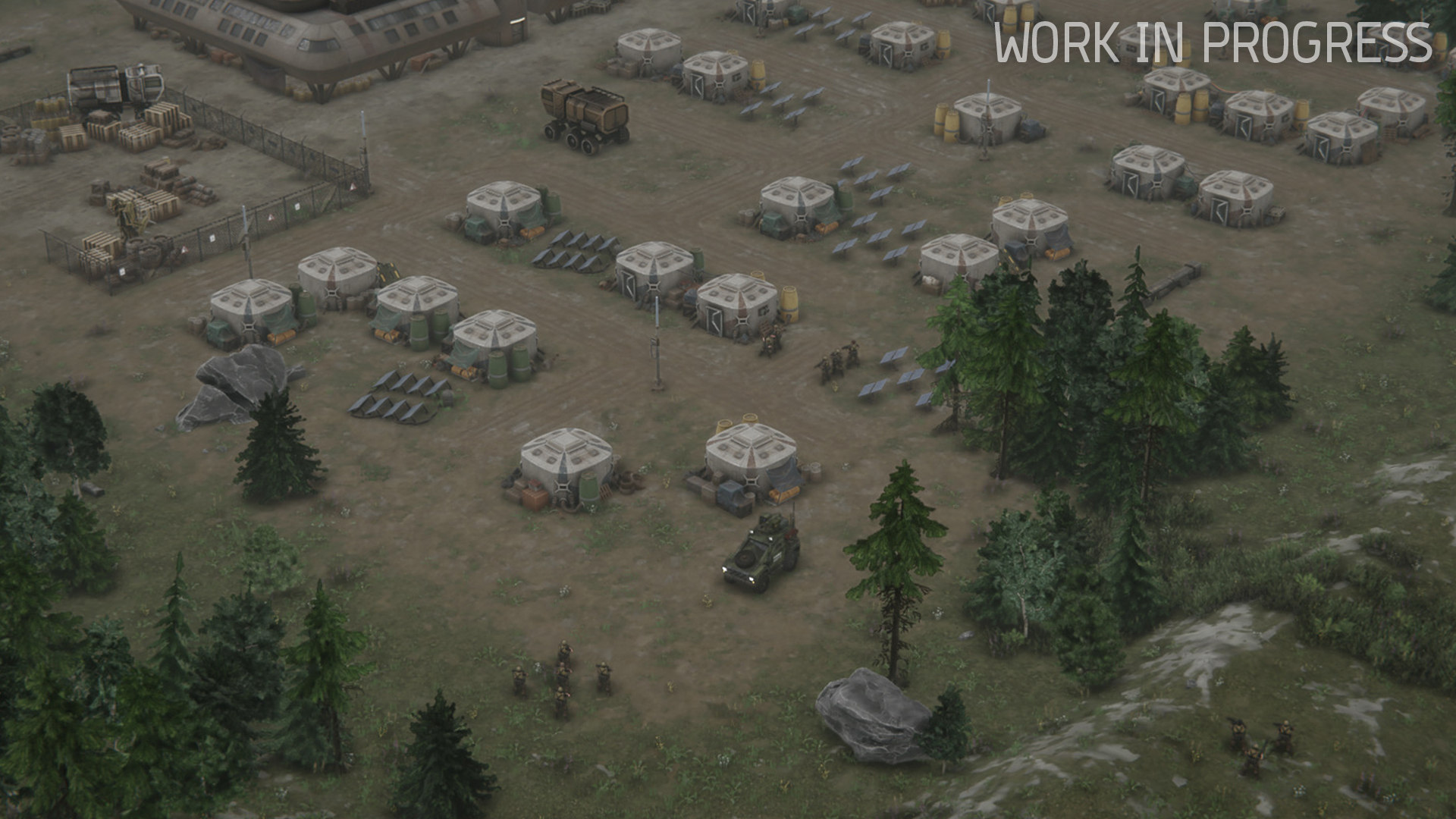 [b]Desert Day Overcast[/b]
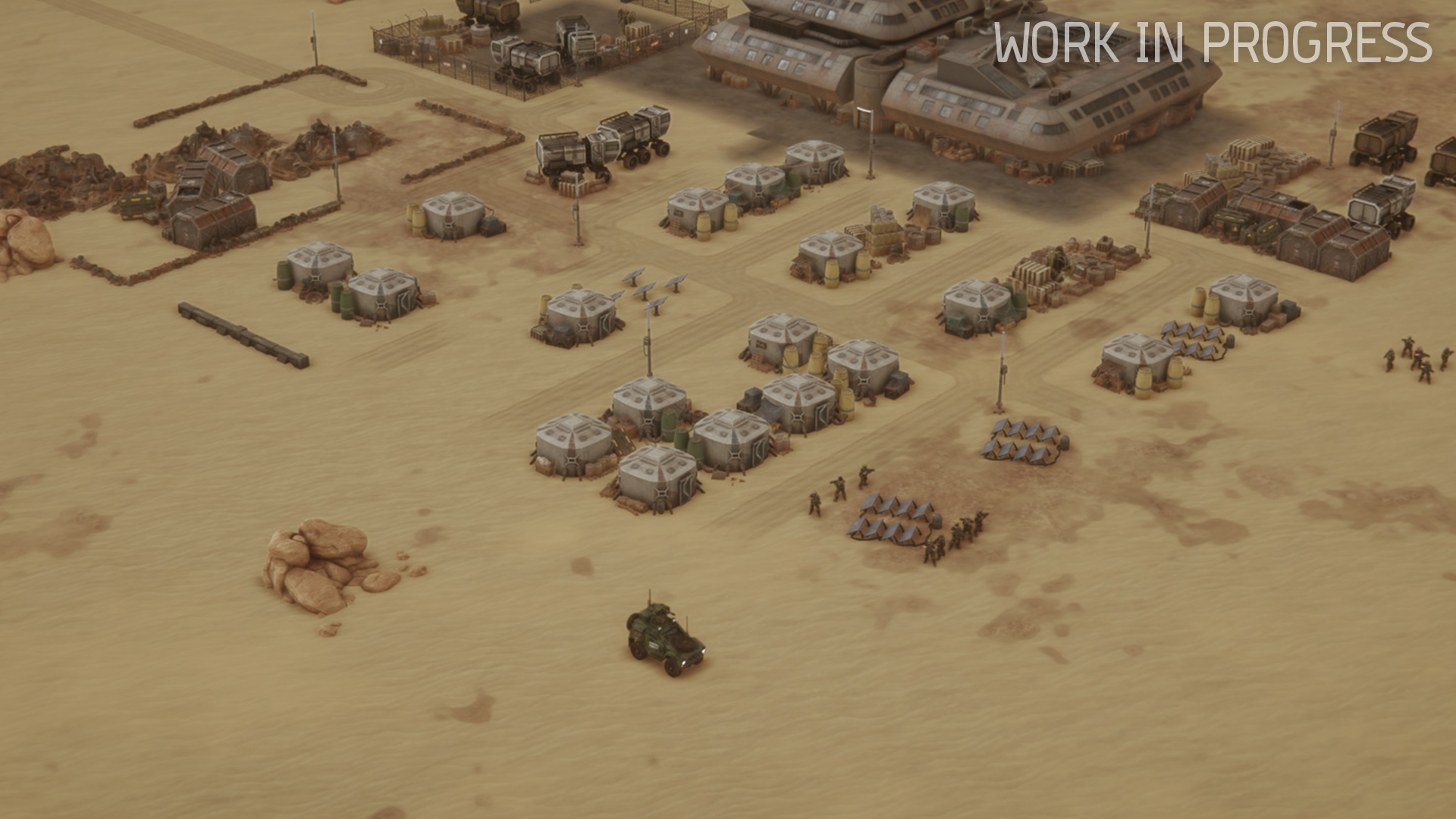 [b]Snow Day Overcast[/b]
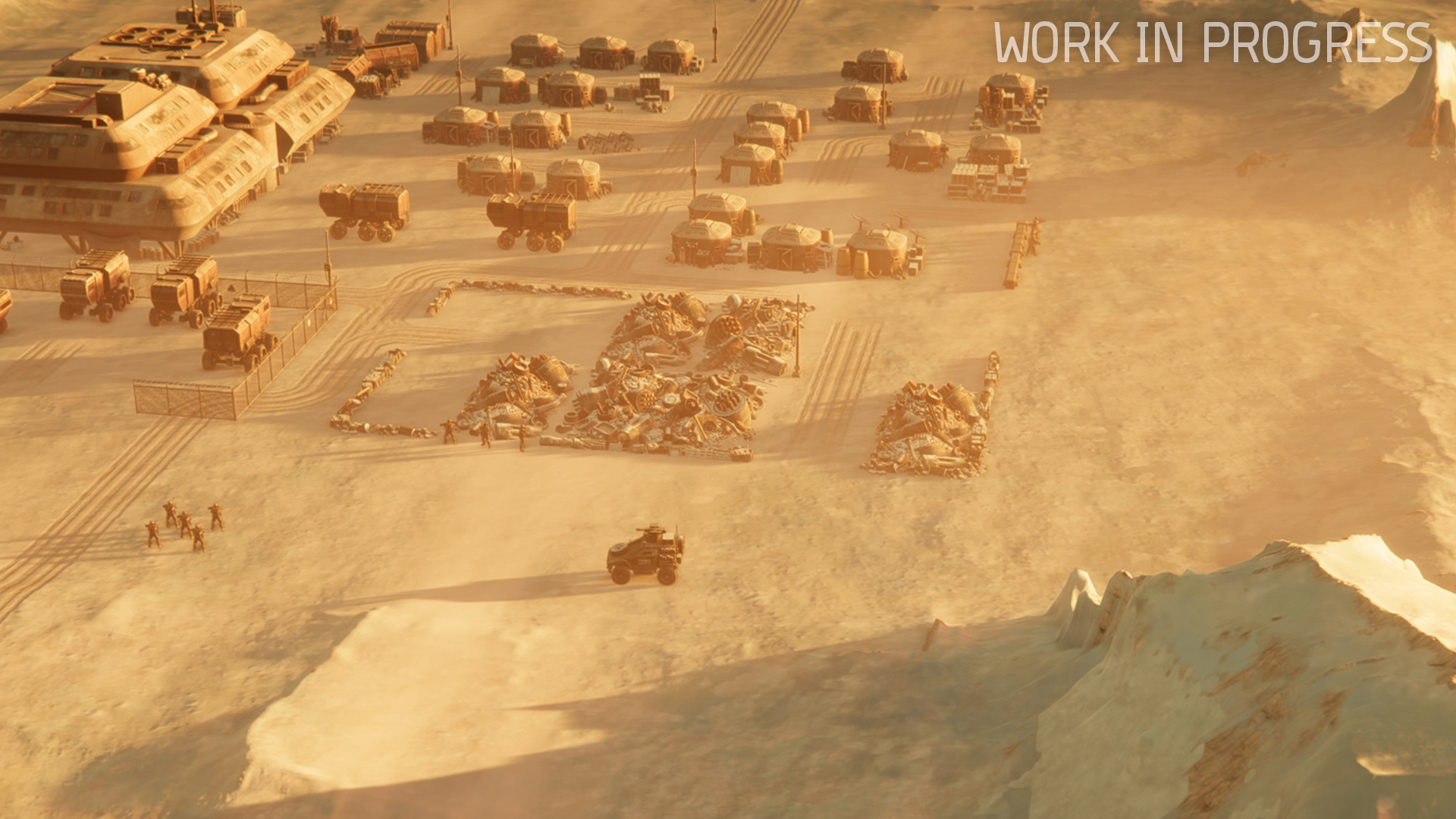
Dusk Clear
[hr][/hr]One of the most distinct lighting effects in nature is dusk, with its very low sun that usually turns into a bright orange. Shadows are long and dark, while the light is still strong but brightly colored. Some fog might rise and create rays of light streaming across the map. [b]Temperate Dusk Clear[/b]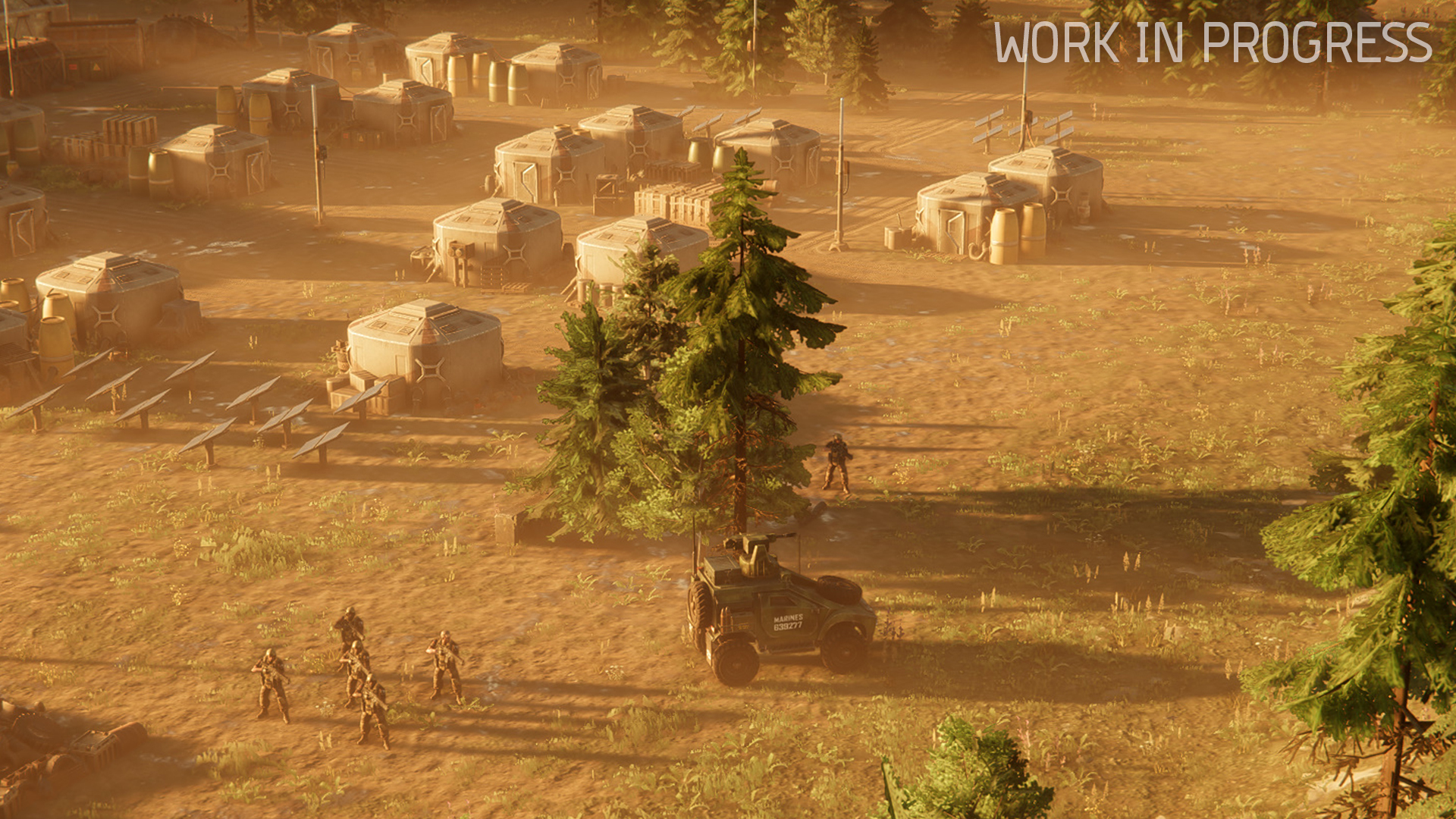 [b]Desert Dusk Clear[/b]
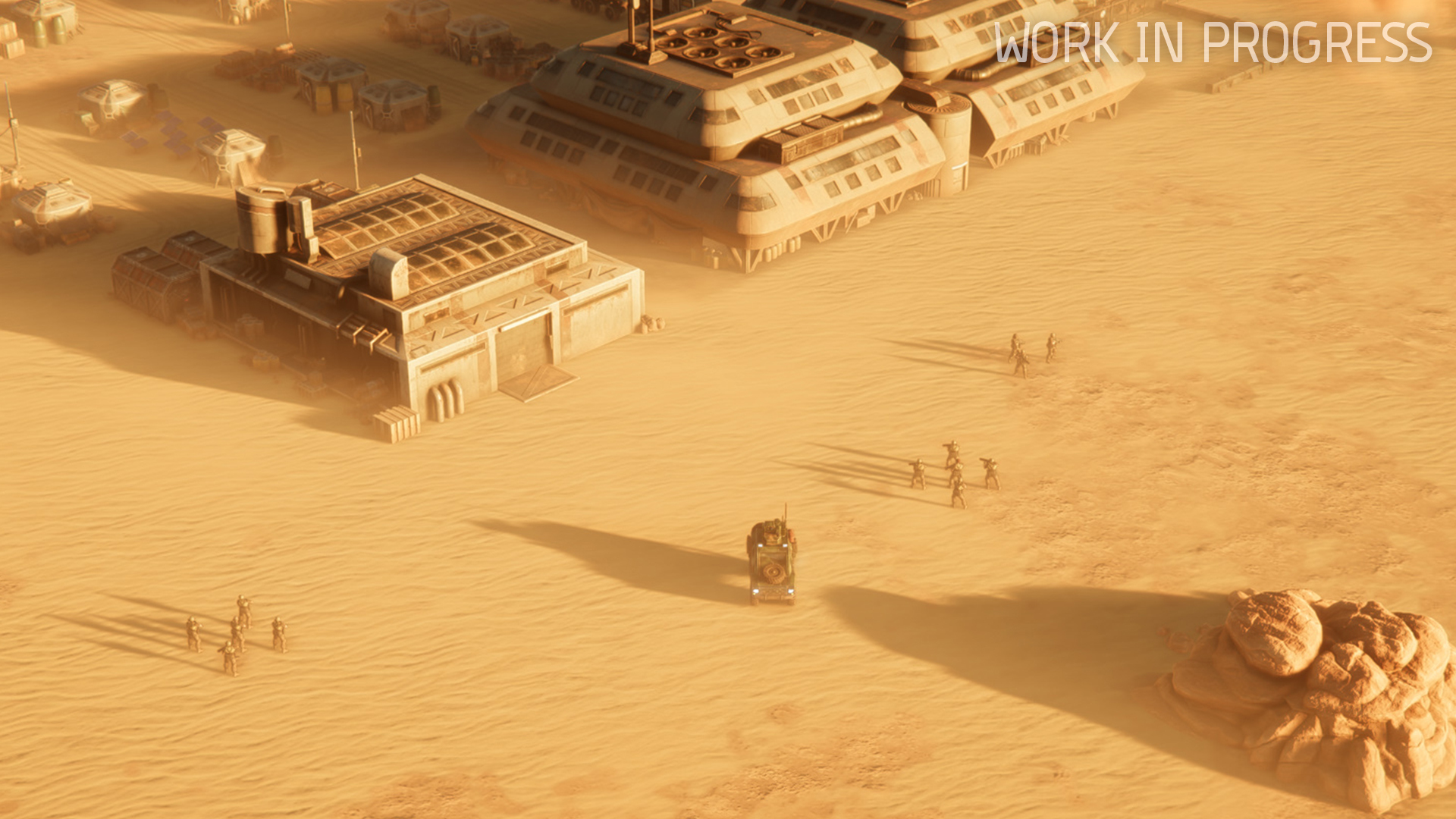 [b]Snow Dusk Clear[/b]
Dusk Overcast
[hr][/hr]While overcast skies are a lot more dampened, we still try to maintain some orange light colors that are typical for dusk light. The sun is not blocked out completely, so there will still be some very soft rays of light to help maintain the atmosphere: [b]Temperate Dusk Overcast[/b]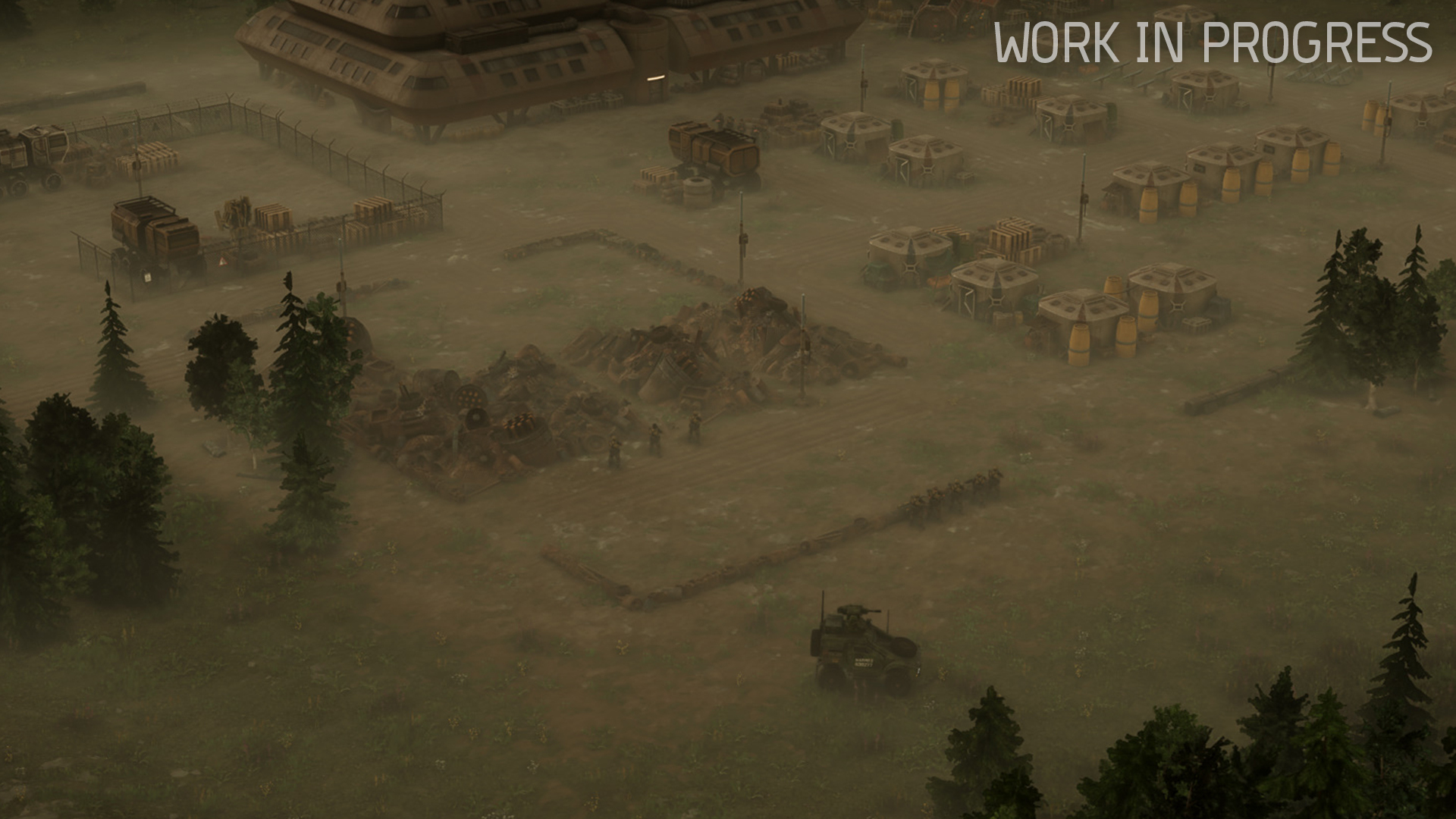 [b]Desert Dusk Overcast[/b]
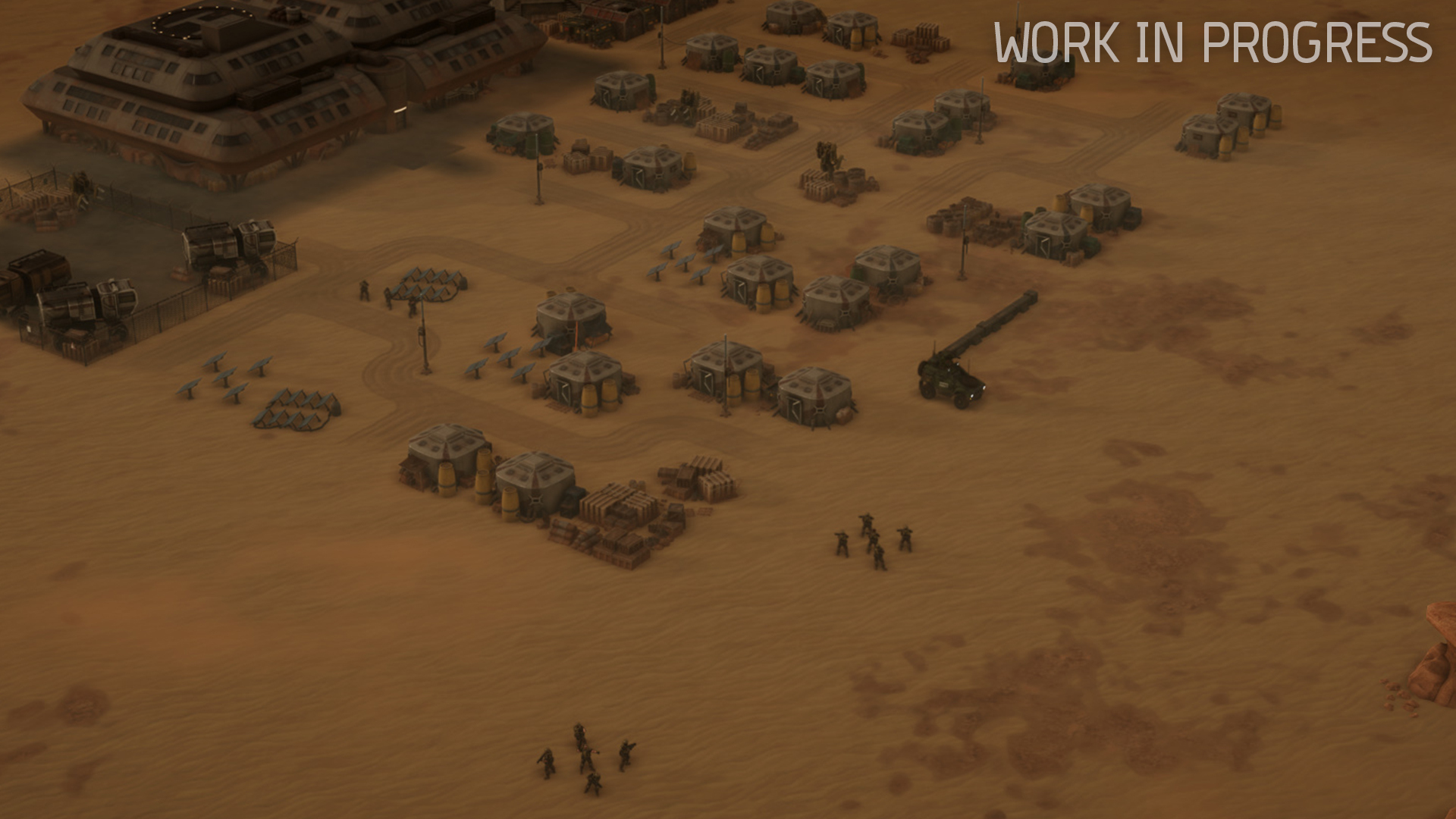 [b]Snow Dusk Overcast[/b]
Night
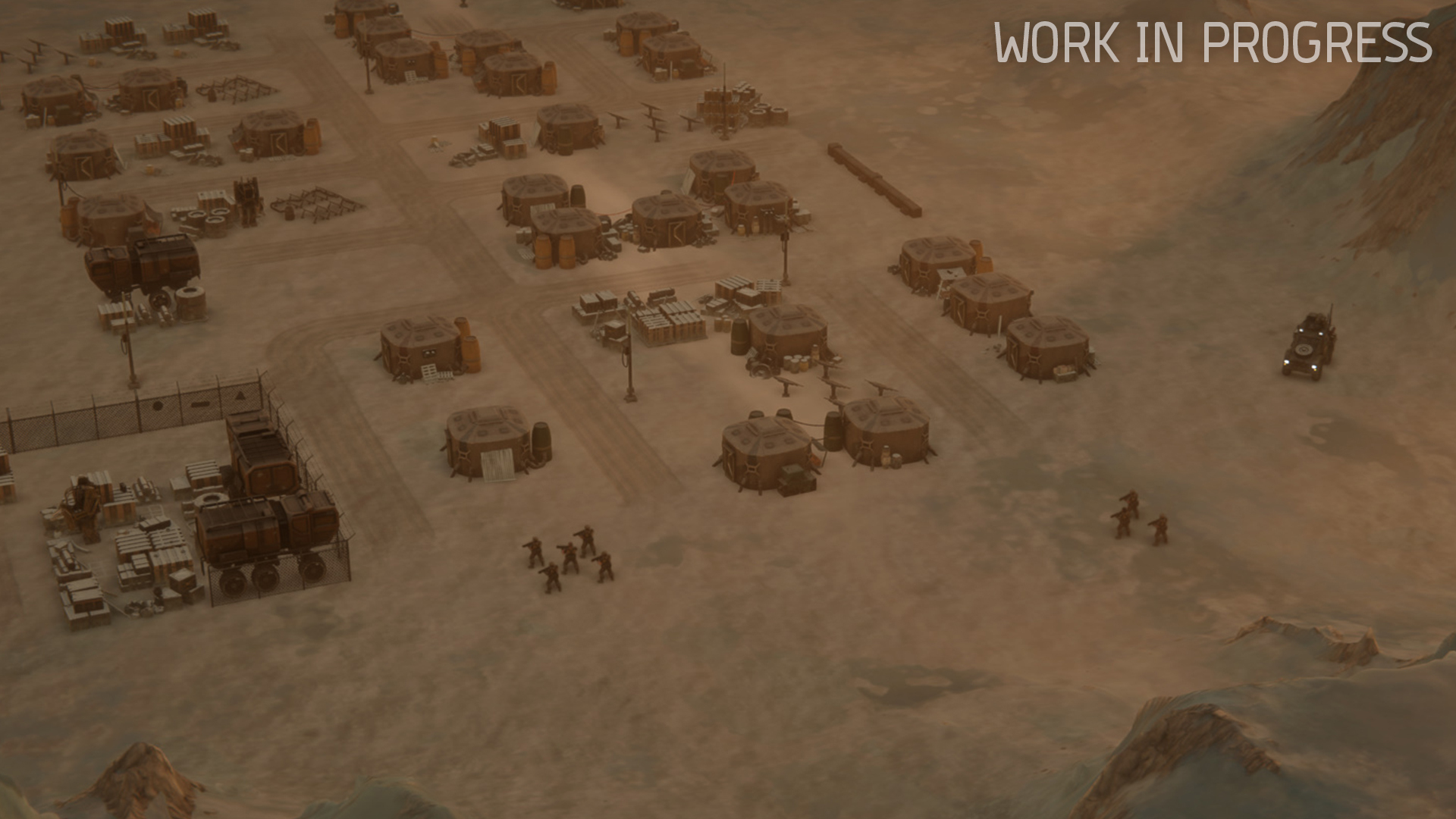
[hr][/hr]Of course, there will be a night as well, and here is where it gets interesting. The night is very dark, with little light and hardly any shadows. The colors are tinted blue or purple and desaturated. To maintain readability for the player, we added actor lights that lightened up all the models on the map to make them stand out a bit more. Also, units have a soft light under them to make it easier to see their positions. Of course, vehicles turn on their headlights at night, creating long and sharp shadows wherever they move and adding to the eerie atmosphere. [i]Note:[/i] No separate overcast lighting variant exists as the night is already very dark. Most importantly, the night will have severe effects on gameplay. All units' vision ranges will be reduced by 4, their detection value by 50%, and their accuracy by 20%. This will lead to fights at night taking place over shorter ranges. This will make them more deadly and bloody as dropoffs do not come into play that much. Equipping short-range weapons and heavier armor can help your units survive at night. [b]Temperate Night[/b]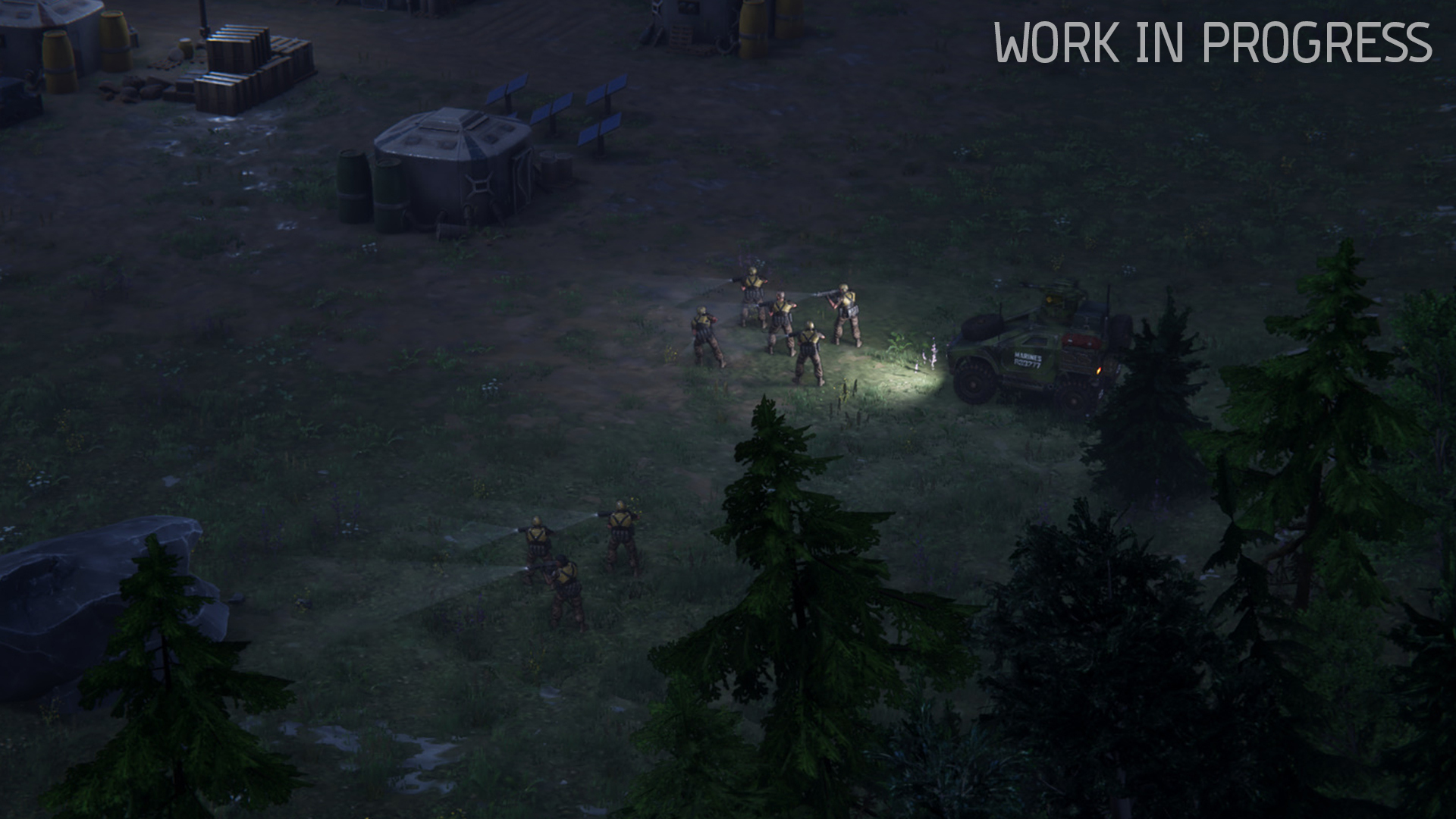 [b]Desert Night[/b]
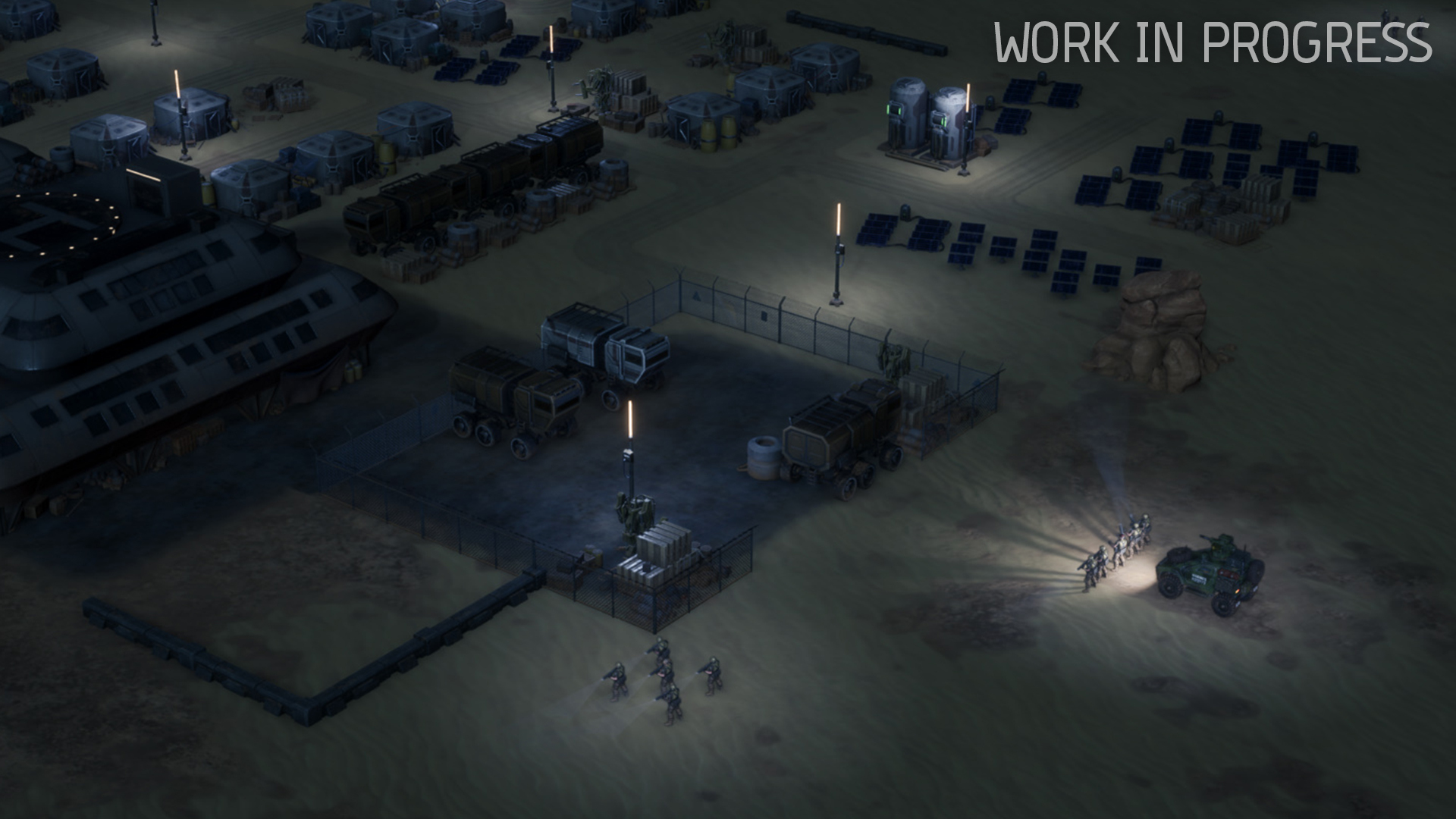 [b]Snow Night[/b]
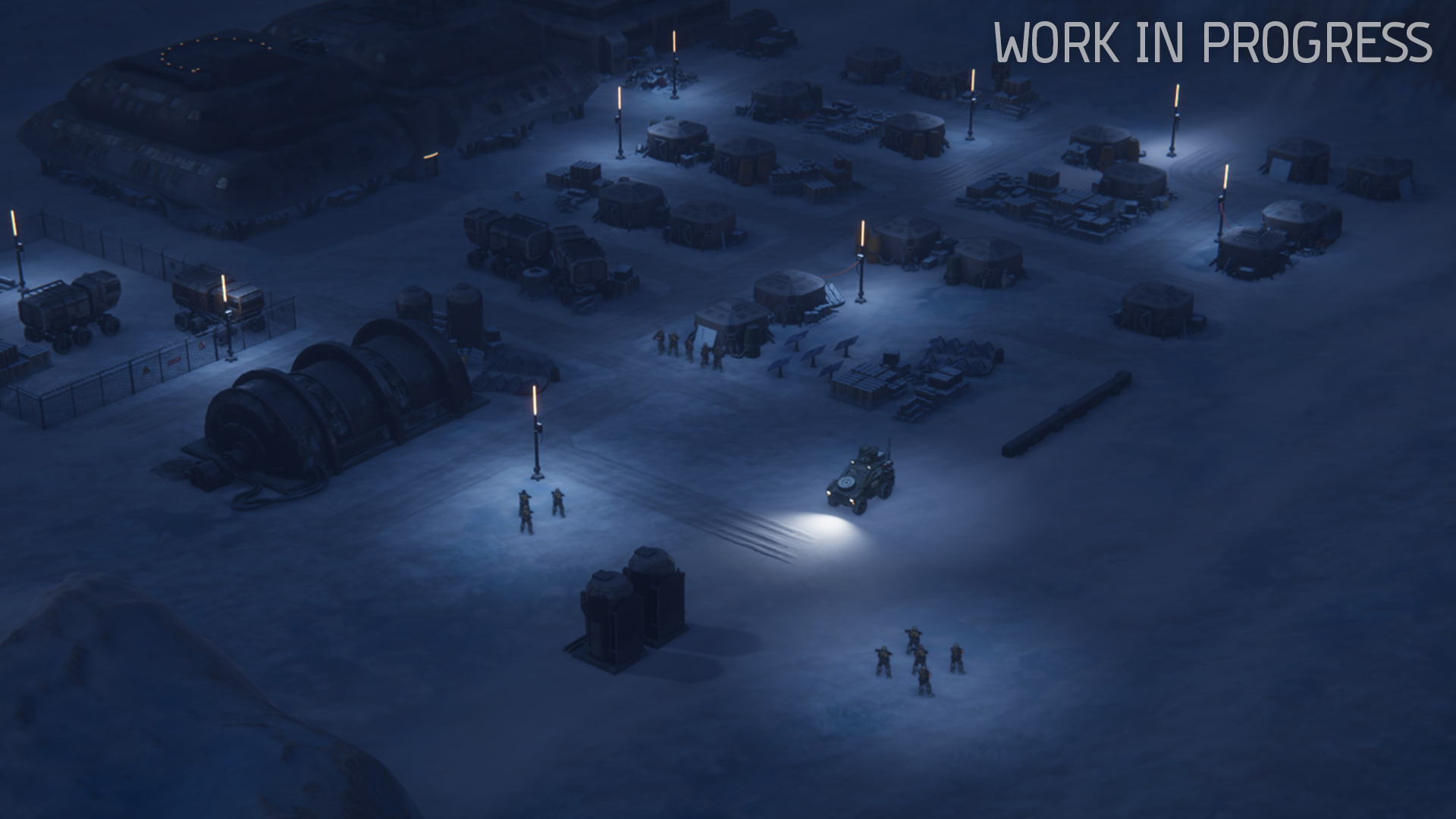
Nightvision
[hr][/hr]To help your troops fight at night, there will be a variety of vision-enhancing equipment, like night vision goggles. They will reduce or remove the negative effects of night light and greatly increase your combat capabilities in darkness. A unit with night vision equipped will see the map like this: [b]Temperate Nightvision[/b]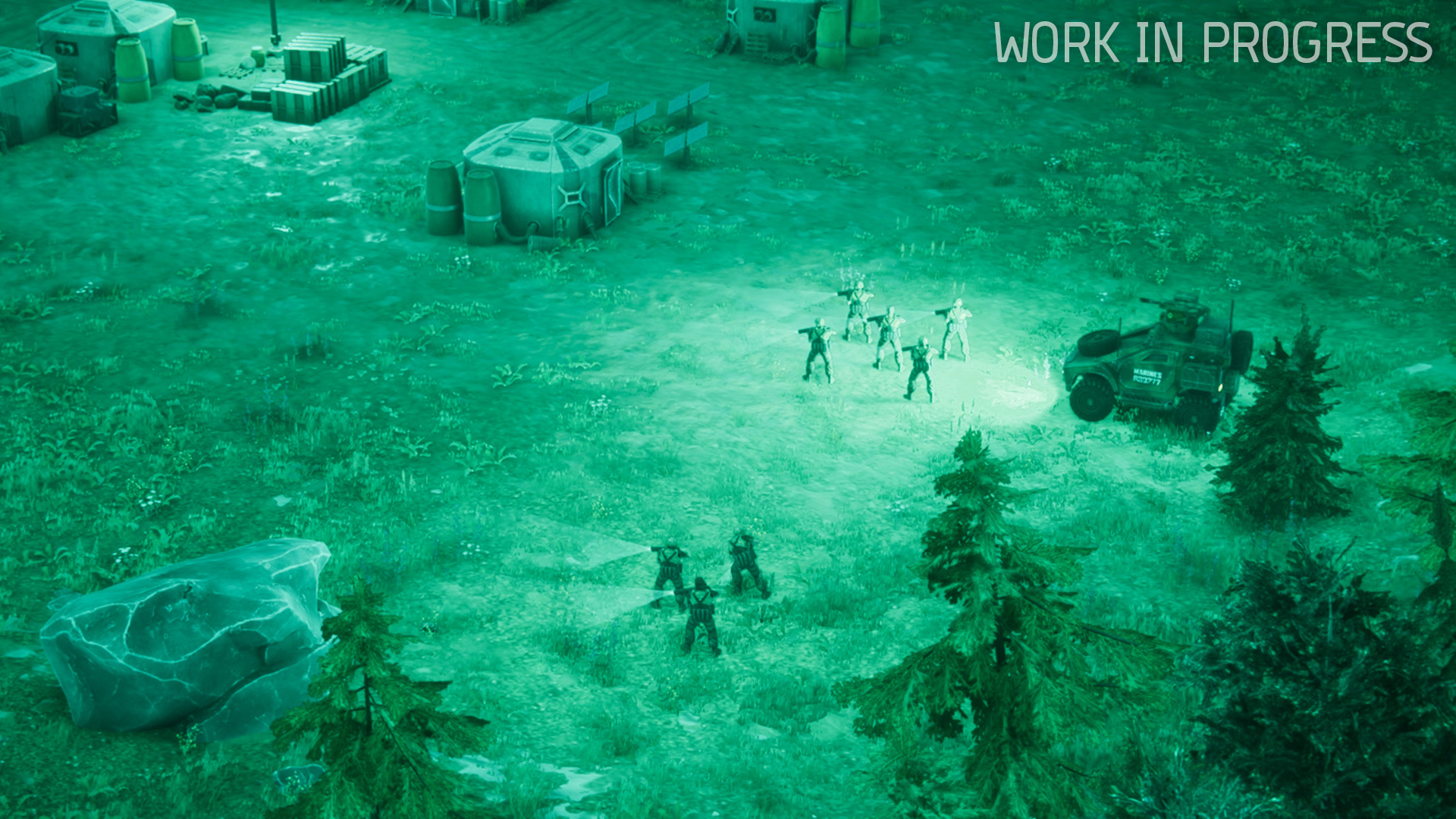 [b]
[b]Weather
[/b][hr][/hr]In addition to the light of day, there will be a variety of weather and environmental effects that also impact visuals and gameplay. We are just starting to create these, and many of their visual effects are in their first iteration.Light & Heavy Rain
[hr][/hr]On the temperate biomes rain is rather common. Light rain will not have any combat impact, while heavy rain or thunderstorms might reduce vision on the battlefield. Of course, all weather effects will come with their ambient soundscape. Capturing rain in a static screenshot is tricky, but here goes: [b]Temperate Rain[/b]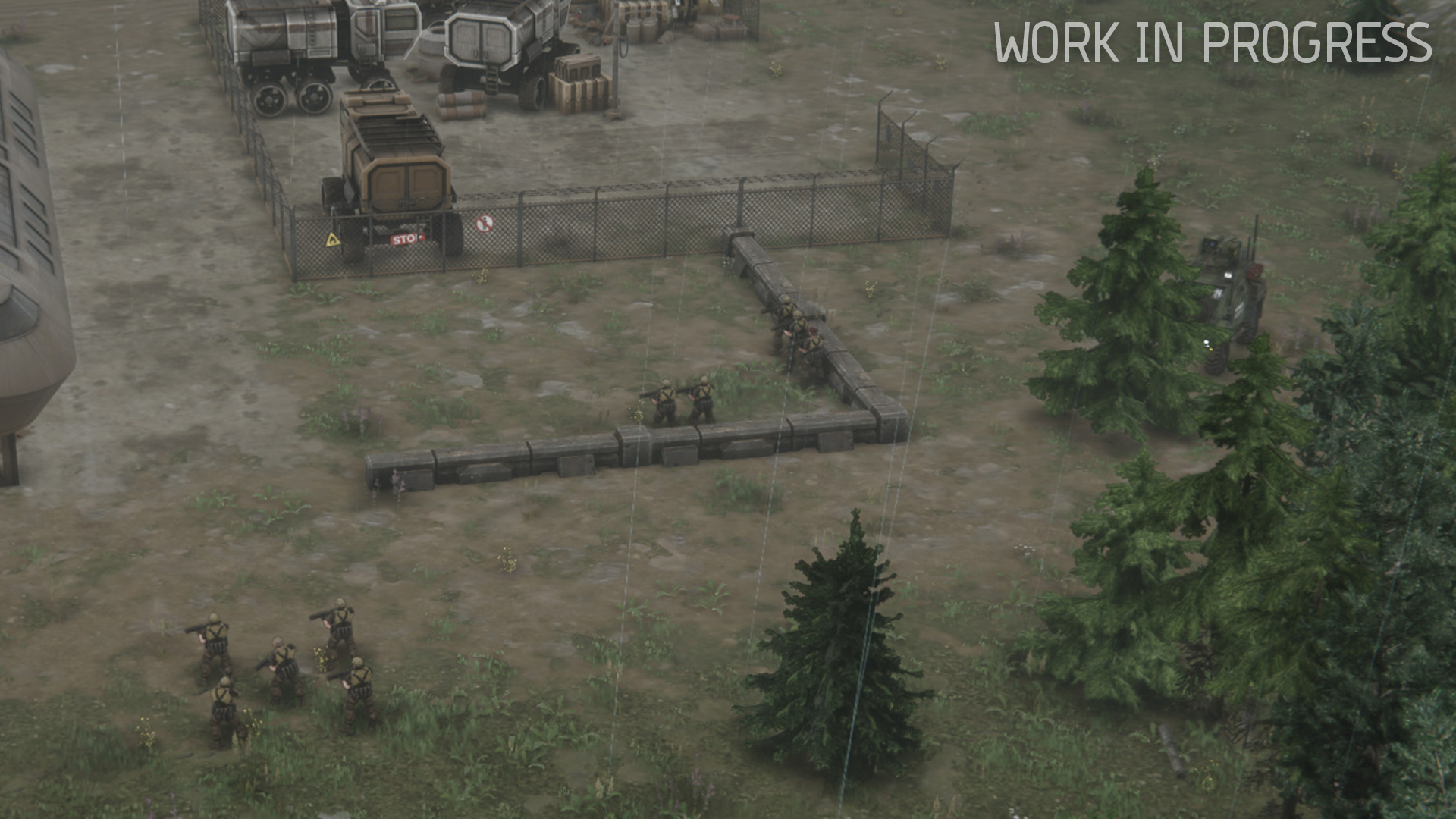
Sandstorm
[hr][/hr]In desert biomes, players might run into the occasional sandstorm caused by heavy winds blowing up sand and dust. Sandstorms are dense and nasty, and fighting them is a real challenge. They reduce not only vision range and accuracy but also movement costs, so units are slowed down: [b]Desert Sandstorm[/b]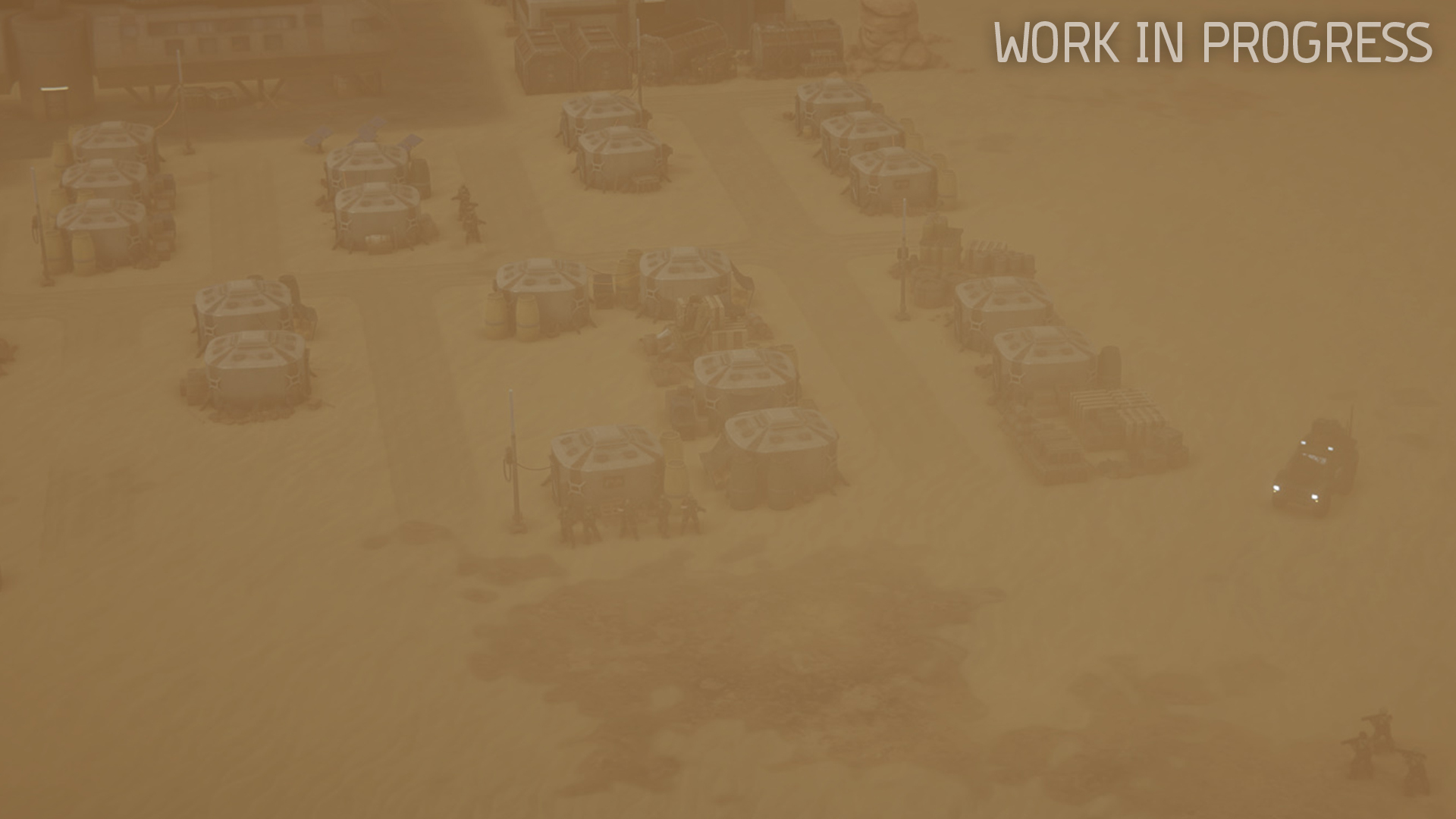
Blizzard
[hr][/hr]Similar to a Sandstorm, a blizzard is an arctic storm with strong winds blowing up snow and ice. Vision is significantly reduced, while accuracy and movement speed suffer.