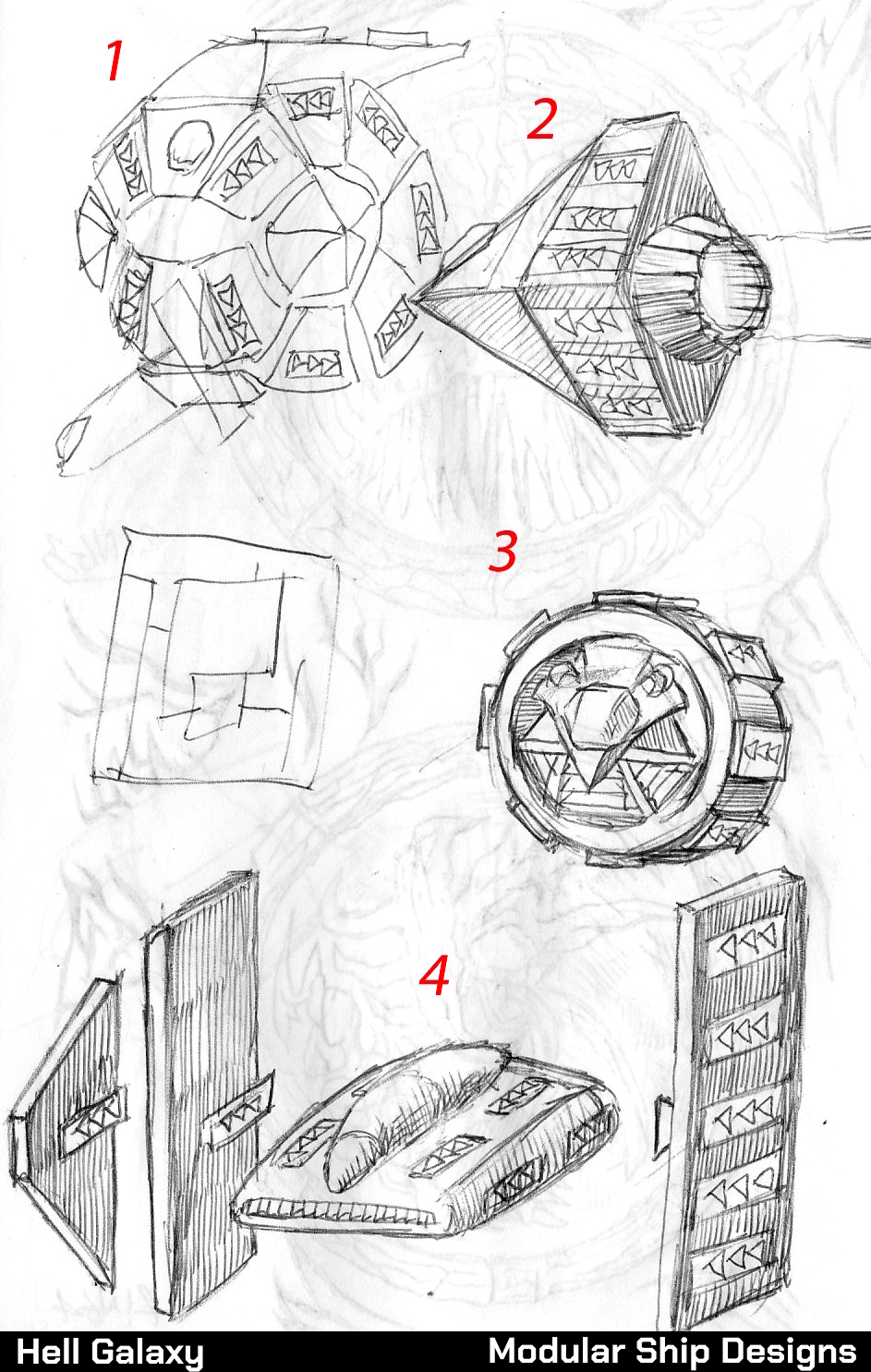
 For in-game implementation, we aimed to keep the shapes of the sockets simple and universal, as each module serves a distinct purpose. Using square shapes as the base ensured they were instantly identifiable while supporting a system that works seamlessly across all modules. This approach allowed us to design compact ships where the hull naturally integrates with the modules, creating a unified yet visually distinct look.
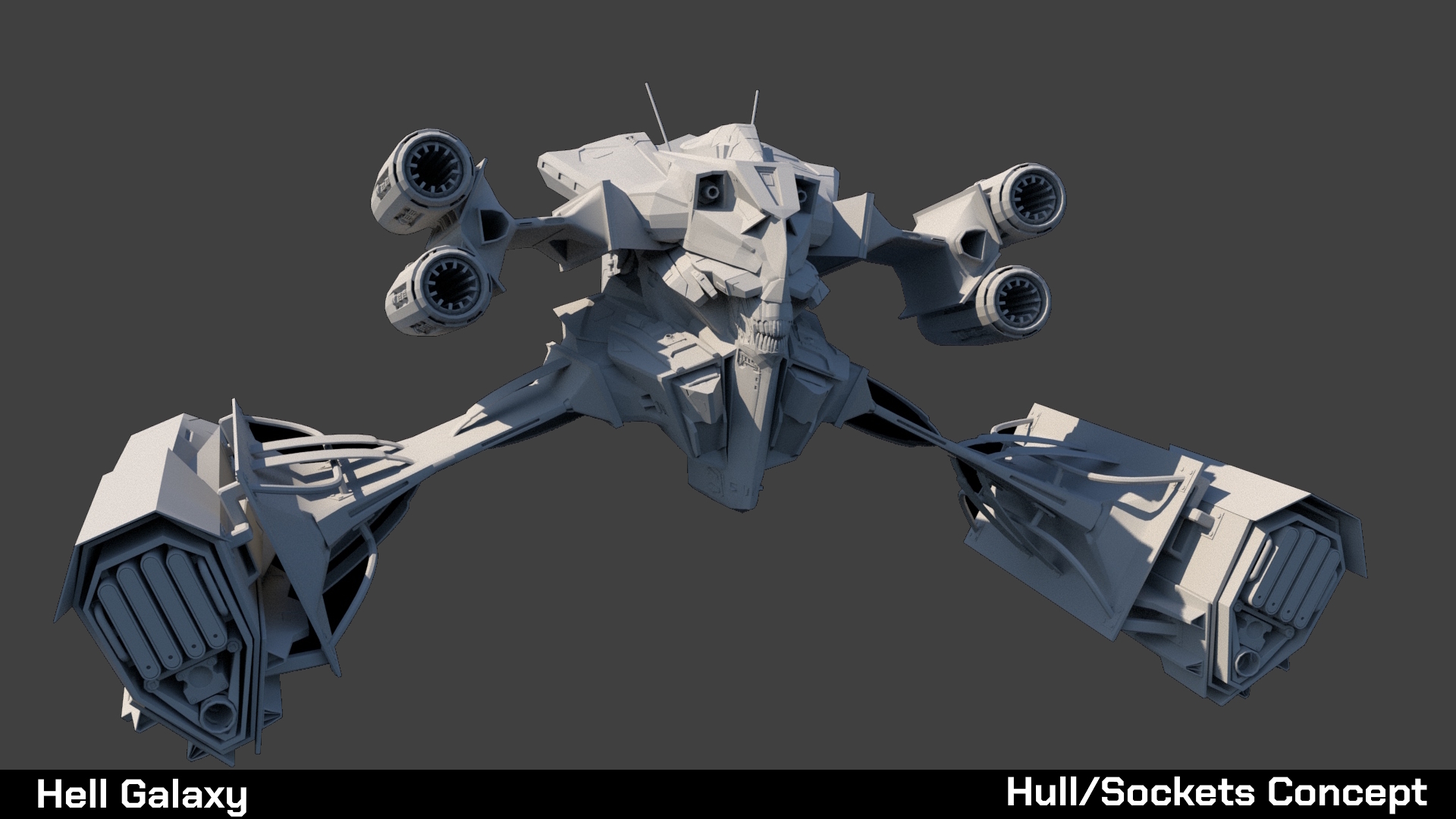 The goal was to maintain a universal attachment system that works seamlessly across all modules, without compromising the uniqueness of their designs. We started by defining each module's function and then focused on achieving a clean, high-tech aesthetic that makes them easy to identify.
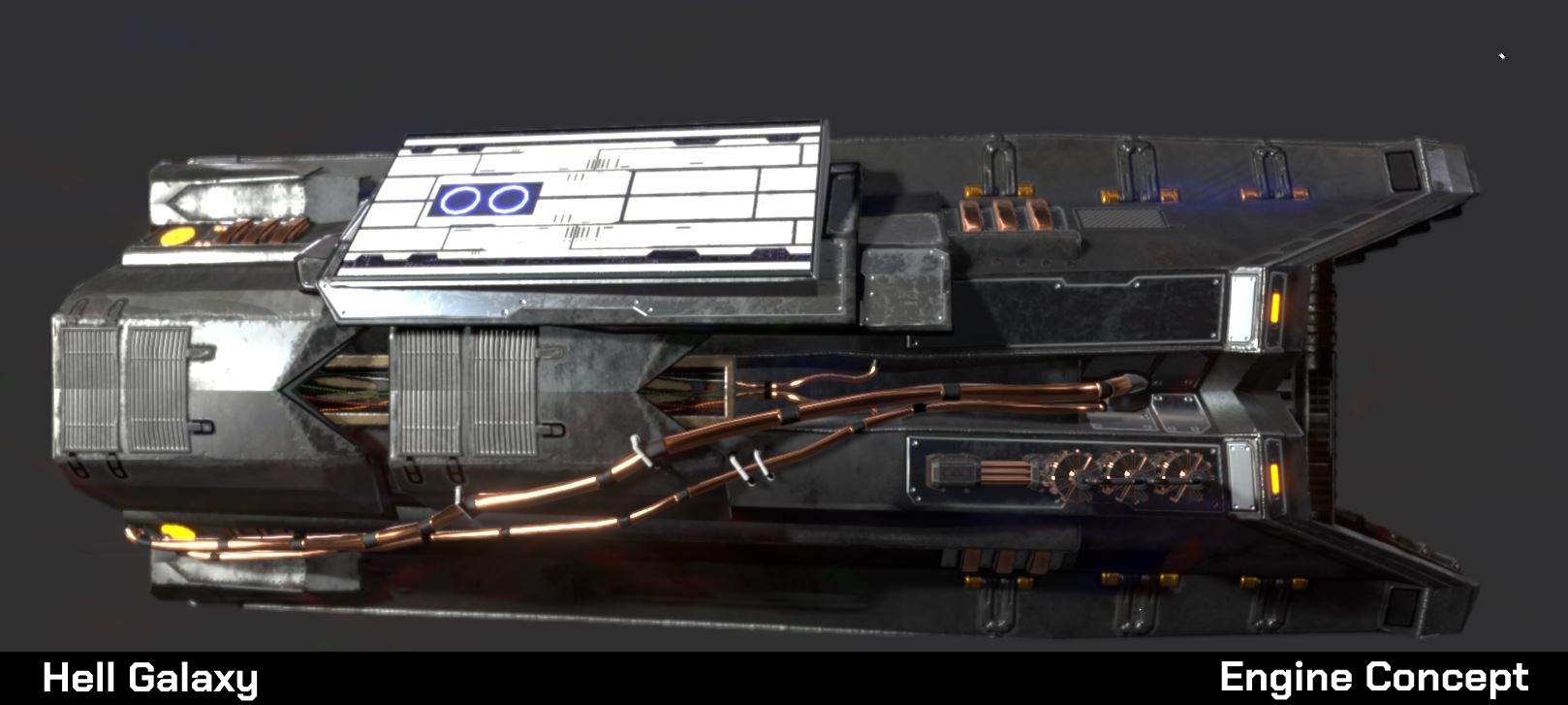 To balance gameplay, we decided to eliminate two types of purchasable modules, those for collecting sonic matter and cargo storage, and instead integrated these functionalities directly into the hull, as we realized that players were often forced to sacrifice valuable attachment slots for weapons or engines in order to accommodate these modules. By integrating them into the hull, we freed up slots for more dynamic builds.
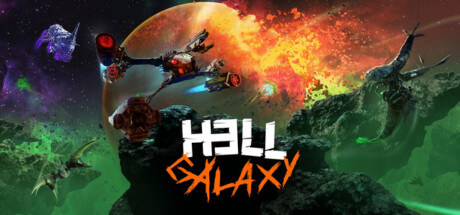
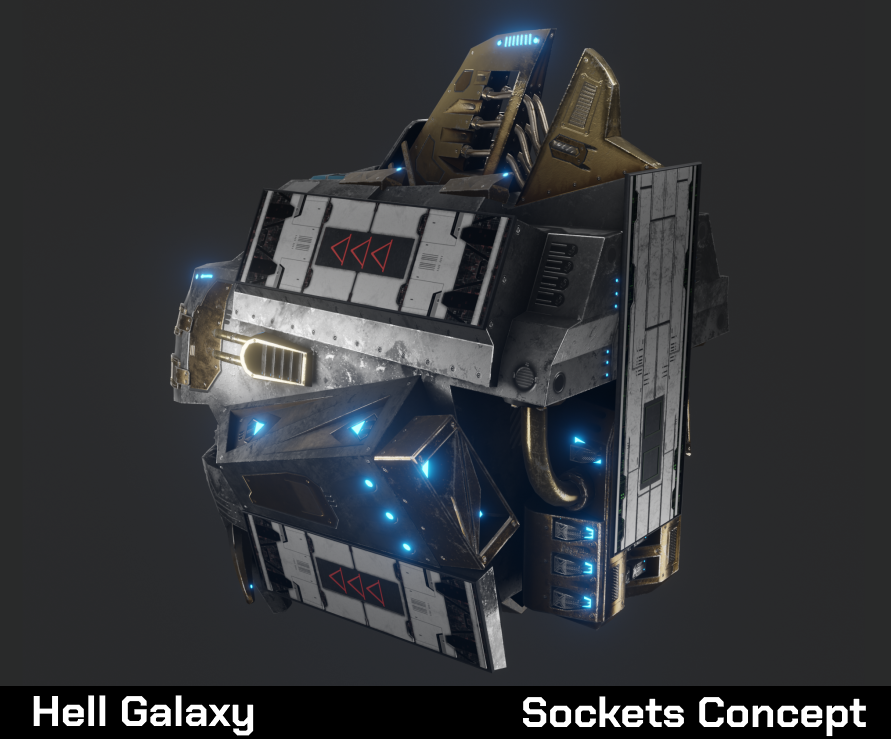 For the modules, we aimed to offer a diverse range of shapes and functions. Some were inspired by classic space combat game archetypes, while others were tailored specifically to the unique universe of Hell Galaxy. We took a similar approach with the hulls, creating a variety of designs to support different builds and aesthetics. This diversity reflects the advanced technological level of the human empire in Neterun's lore, a civilization capable of colonizing even the darkest corners of the universe.
That’s all for this dev diary. We hope you’ve enjoyed this peek into our creative process, and stay tuned for the next entry.
Farewell, raiders!
For the modules, we aimed to offer a diverse range of shapes and functions. Some were inspired by classic space combat game archetypes, while others were tailored specifically to the unique universe of Hell Galaxy. We took a similar approach with the hulls, creating a variety of designs to support different builds and aesthetics. This diversity reflects the advanced technological level of the human empire in Neterun's lore, a civilization capable of colonizing even the darkest corners of the universe.
That’s all for this dev diary. We hope you’ve enjoyed this peek into our creative process, and stay tuned for the next entry.
Farewell, raiders!