[b]Your Feedback Matters[/b]
[hr][/hr]Norland grows and changes because of you. Every reworked system, every balance shift, every removed bit of unnecessary micromanagement comes from the feedback you provide. If you haven’t yet, leave a Steam review—whether it’s insight, critique, or a cautionary tale about what happens when too many prisoners flood the workforce, your words help shape what comes next.Major Changes in This Build
- [b]Instructions, Migration, Scaffolds, Crime, Alcohol, Church Sermons, Lord Interactions, and Character Needs[/b] have all been reworked.
- [b]Guest behavior, puppet mechanics, worker distribution, and hunting logic[/b] have been modified to function more effectively.
- [b]New enemies[/b] have been added.
- [b]The tutorial[/b] has been updated.
- [b]Game balance[/b] has been overhauled to better reflect player feedback.
- [b]New music and trees[/b].
Overhaul of Core Mechanics
[hr][/hr]Instructions
Now, a single [b]Lord[/b] in the Hall issues daily instructions to the servants, who then distribute them to the buildings. You no longer need to assign instructors to each building—servants handle it automatically. The [b]production bonus[/b] is now determined by the managing Lord. [b]More details:[/b] [expand type=details expanded=false]In earlier versions, [b]Lords[/b] had no connection to production, which made the game feel like two separate systems: a city-builder and a lord-management sim. [b]Instructions[/b] were introduced to unify these elements by tying city-building to the Lords. However, the mechanic wasn’t ideal—it mostly boiled down to auto-selecting the best Lord, adding micromanagement and unnecessary clicks. Now that Lords have more responsibilities, we streamlined this mechanic using an [b]office-style structure[/b]—the connection remains, but with far less micromanagement. Some hardcore players might see this as a simplification, but the original system didn’t offer much challenge to begin with. Besides, we plan to introduce [b]new city-building mechanics[/b] that will deepen construction and management, so removing non-impactful micromanagement is a necessary step forward. [/expand]Migration
[b]Migration[/b] now directly depends on the [b]average mood of peasants throughout the day[/b]:- [b]Above 50[/b] – 3 people arrive.
- [b]Below 25[/b] – People leave.
- [b]Above 80[/b] – 5 people arrive.
Scaffolds
A change partially related to migration—scaffolds now function automatically without requiring instructions. They now operate in the evening, ensuring the spectacle of executions influences more characters nearby (placing scaffolds near taverns is highly recommended). Executions are now a powerful tool for shaping the mood of your subjects. [b]Executioners[/b] no longer conduct [i]investigations[/i]—they now focus solely on executing criminals from the [i]prisoner population[/i]. Each [b]scaffold[/b] is now assigned a single executioner, who can carry out [i]one execution per day[/i]. The rest of their time is spent [i]intimidating vagrants[/i], reinforcing order in the settlement.Crime
Criminals caught in the act by patrols now surrender after three strikes. Once subdued, patrolmen tie them up and turn them into prisoners. The next day, executioners arrive to carry out executions in the manner of your choosing—the more brutal the method, the more entertaining for spectators. Or, if you need prisoners for labor, executions can be disabled at the scaffold, keeping them alive as a workforce. You can now buy prisoner-criminals from caravans purely for entertainment purposes. On the other hand, crimes now have a greater impact, lowering the average mood of all city residents. The chance of bandits arriving with migrants has risen from 15% to 25%.Alcohol
I removed the [b]"Fatigue"[/b] thought, which was automatically generated after work and relieved by alcohol. Now, alcohol simply provides a lasting mood boost, helping to maintain a higher daily average. [b]More details:[/b] [expand type=details expanded=false]Fatigue was originally meant to encourage alcohol production, but in practice, it just created early-game pressure—especially frustrating for newcomers. With migration now tied to average mood, that pressure is no longer necessary. Alcohol’s role is clearer: a straightforward, long-lasting mood boost rather than a required fix for an arbitrary penalty. By the mid-game, Fatigue had little impact beyond causing mood swings, making its removal a logical step toward a smoother experience. [/expand]Church Sermons
The mandatory morning service has been removed. Sermons now take place in the evening and require rings, which go directly into the bishop’s pocket. To hold agnostic sermons, you’ll need to purchase a separate book.Lord Interactions
The type of spontaneous interaction lords choose is now less random and primarily influenced by their mood. Small talk has also been added.Character Needs
The "Character Needs" tab has been removed. The number of thoughts from these needs has been reduced, and they now appear directly in the main character menu tab. [b]More details:[/b] [expand type=details expanded=false] Traditional "needs" posed a design challenge—since they’re mostly physiological, they didn’t apply well to elites who never worry about food or shelter. Over time, it became clear that social factors had a much greater influence on their thoughts. At the same time, managing a second menu tab just added unnecessary friction. Now, needs remain, but redundant mid-level thoughts have been removed, making thought management more focused and less tedious.[/expand]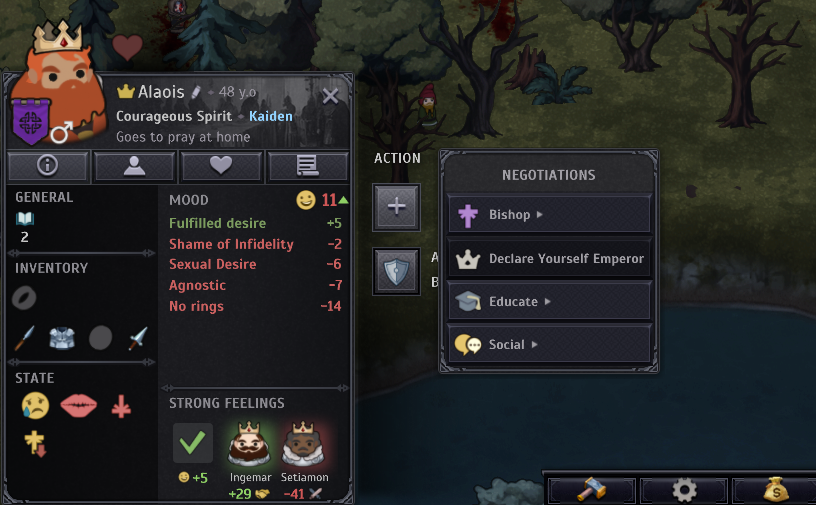
Other Improvements
[hr][/hr]New Strategic Considerations for Map Movement
Entrances and exits are now placed on all four sides of the map, and characters leave in the direction of their geographical target on the global map. Enemies also come from different sides, making wall construction more interesting.Ragged Bands: Raiders, Arsonists, and the Rising Threat
With the introduction of walls, we had the opportunity to give them more significance by adding military pressure, as cities are rarely under siege. Ragged Bands are weak, lightly armed enemies, but their numbers grow over time. While they aren’t a threat to lords, their goals are disruptive—raiding peasant homes, taking prisoners, and setting fires to create chaos. They also appear without warning and attack from multiple sides, making an internal garrison essential for defense.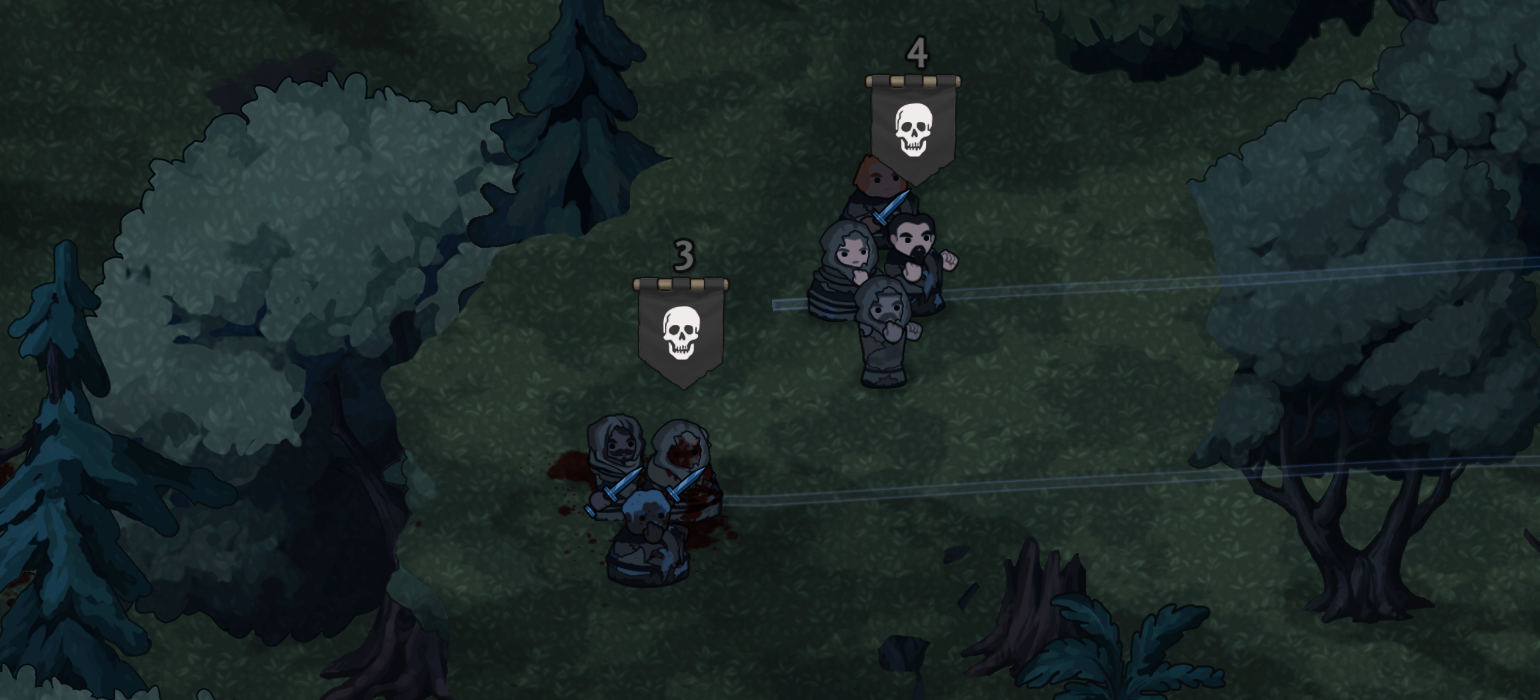
Balance of Power on the Global Map
To balance this, armies in other provinces on the global map have been weakened (except in hardcore mode), and the army sizes of ambitious kings have been capped.Recruiting Peasants
A long-awaited fix — you can now recruit your own peasants, not just the desperate ones. Fanatics still require the ruler’s blessing, but all recruits now demand an advance payment based on their combat skill, just like regular warriors.[b]Diplomacy Changes on the Global Map[/b]
- You can now burn other kings' vassals to the ground. Not sure why this was disabled—thanks to [i]Watermeloentje[/i] for pointing it out.
- Peace treaties now allow for dark dealings. If someone is clearly stronger than you, make peace and then start scheming.
- Hunting on the global map has been reworked. Wolves are now [b]level 10[/b] and forced conversations after a hunt have been removed. You will now see the success probability of a hunt when assigning a character—this depends on their [b]Combat skill[/b].
Controlling Puppets with Purpose
Previously, puppets appeared automatically, often going unnoticed. Now, the king has a "Make Puppet" button, providing a clear explanation of the requirements and why it may not always be possible. The puppet threshold for children has been lowered to 50, with stronger ties to their parents. This means a bride from the global map could end up as a problematic puppet under a neighboring king. But this works in your favor too—marry off your puppet brides, and you gain leverage over your rivals.Seduction as a Political Weapon
Seduction now occurs under the king’s orders, meaning the executor manages the seduced target. The target not only loses loyalty but also becomes deeply enamored with the king. This is now the most effective way to create puppets in other cities. Interest logic has been refined with new factors, making seduction a more accessible tool.Schemes and Social Intrigue Among Guests
The system assigning roles to visiting guests wasn’t working properly, so we fixed it. Now, you’ll encounter puppet masters, seducers, and other schemers far more often. A new "parental visit" role has also been added—parents of brides you’ve married off to your lords may now pay a visit.Balance Changes
- New trees grow almost twice as fast, addressing the wood shortage until a forester is implemented. This is necessary as walls require more wood.
- Fertility penalties have been removed, allowing fields to be placed on any soil. Fertile plots now provide a 20% yield bonus, but overall yield has been reduced by 20%, meaning this doesn’t affect early-game farming when fields are placed on fertile land.
- Production speed has been slowed down across most production buildings.
- Level 4 and 5 buildings have been removed.
- To compensate, initial trade contracts on the global map now provide larger quantities of goods.
New music and trees
[hr][/hr]The soundtrack has been reworked, in-game effects have been modified. We also reworked trees on the local maps. And main menu art.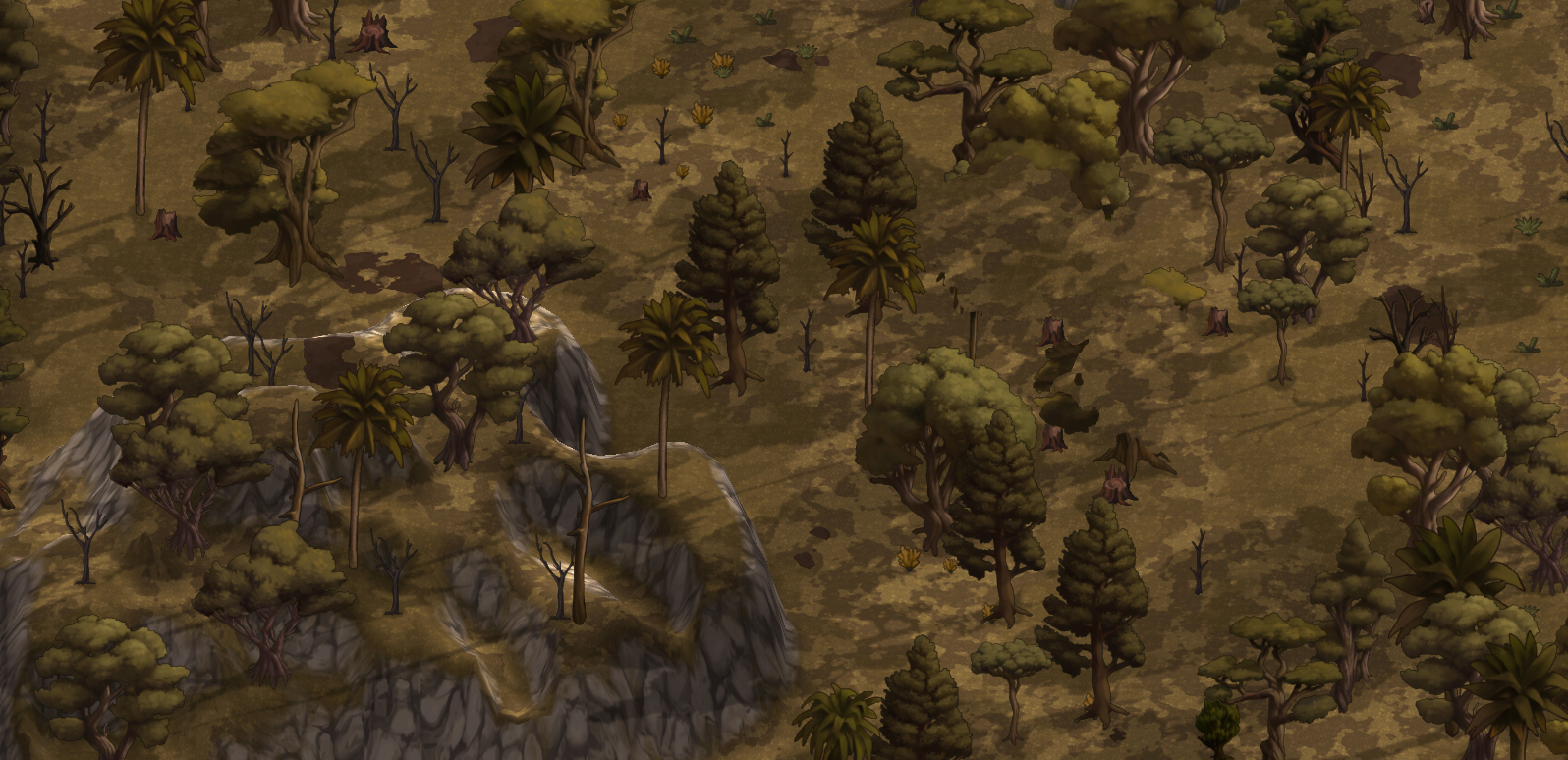 [hr][/hr]
Phew, that should cover everything. Of course, there are dozens of smaller improvements—like being able to see trade deal conditions in neighboring cities even if you can't make a deal yet—but I’ve probably given you enough to digest for now.
As always, we’re eager to hear your thoughts on these changes and look forward to seeing you in [url=https://discord.gg/pGrystr9]Discord[/url].
Thank you!
P.S. Yes, we are aware of memory leaks and crashes, and we are actively working on it. We've already identified the issue, and a fix is coming soon.
[hr][/hr]
Phew, that should cover everything. Of course, there are dozens of smaller improvements—like being able to see trade deal conditions in neighboring cities even if you can't make a deal yet—but I’ve probably given you enough to digest for now.
As always, we’re eager to hear your thoughts on these changes and look forward to seeing you in [url=https://discord.gg/pGrystr9]Discord[/url].
Thank you!
P.S. Yes, we are aware of memory leaks and crashes, and we are actively working on it. We've already identified the issue, and a fix is coming soon.